 Pin it
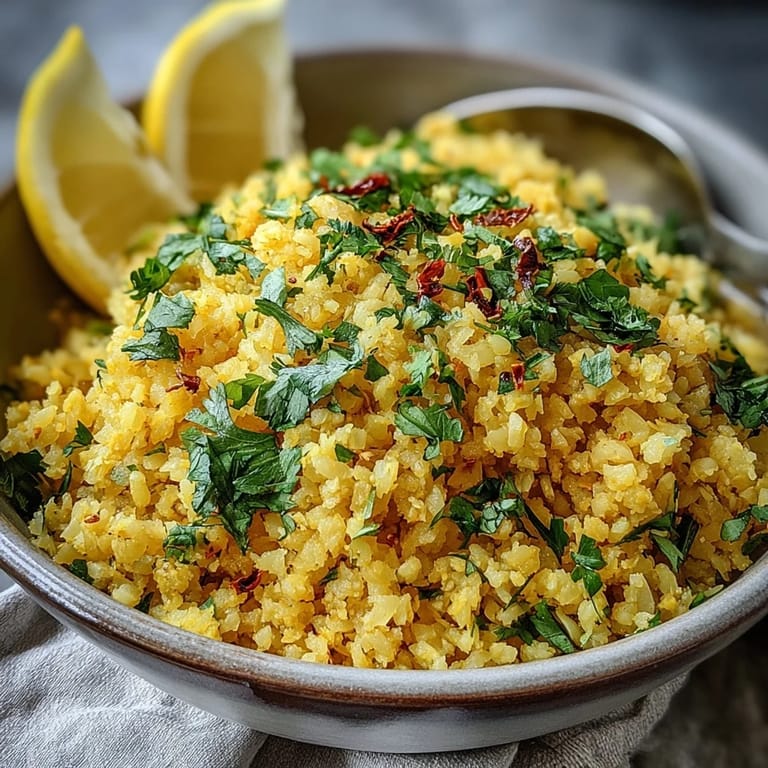
 I discovered turmeric cauliflower rice on a Tuesday afternoon when my usual grocery store was out of regular rice, and I needed something quick to pair with leftover curry. The golden spice cabinet was calling to me, and within minutes of pulsing cauliflower in my food processor, the kitchen filled with that warm, earthy turmeric aroma that somehow made a simple side dish feel like medicine for the soul. It became the dish I now make without thinking, the one that tastes better than it has any right to be.
My partner took one forkful at dinner and asked if I'd finally hired a personal chef, which made me laugh until I realized he was serious. That moment of him reaching for seconds without being prompted told me this wasn't just a health food compromise—it had become something genuinely craveable. Now whenever I mention making turmeric cauliflower rice, there's this shift in the room, like everyone suddenly remembers they have an appetite.
Ingredients
- Cauliflower florets (1 medium head): The foundation of everything—choose one with tight, pale florets and skip any with brown spots or soft patches because they'll turn mushy faster.
- Onion (1 small, finely chopped): This is your flavor base, and finely chopping it ensures it disappears into silky tenderness rather than sitting as chunks.
- Garlic (2 cloves, minced): Don't use the pre-jarred stuff here; fresh garlic browns faster in the pan and releases oils that make everything taste rounder.
- Olive oil or coconut oil (1 tablespoon): The vehicle for your spices, and coconut oil will give you a slightly nuttier undertone if you're feeling adventurous.
- Ground turmeric (1 teaspoon): This is where the magic lives—that golden color and warm bitterness that anchors the whole dish.
- Ground cumin (1/2 teaspoon): The supporting player that adds earthiness without announcing itself.
- Ground black pepper (1/4 teaspoon): A pinch of bite that wakes up your palate.
- Sea salt (1/2 teaspoon): Taste as you go because different brands hit differently, and you might need more or less.
- Red chili flakes (optional pinch): For when you want the dish to whisper something spicy in the background.
- Fresh cilantro or parsley (2 tablespoons, chopped): The final flourish that makes it feel intentional rather than just cooked.
- Lemon juice (1/2 lemon): The acid that ties everything together and prevents the dish from tasting flat or one-note.
Tired of Takeout? 🥡
Get 10 meals you can make faster than delivery arrives. Seriously.
One email. No spam. Unsubscribe anytime.
Instructions
- Pulse Your Cauliflower Into Rice:
- Cut your cauliflower into manageable florets and work in batches through the food processor, using short pulses until you get rice-sized pieces. Listen for the sound to change—when the processor starts sounding frustrated instead of efficient, you know the cauliflower is done.
- Build Your Aromatics:
- Heat oil in a large skillet over medium heat and watch it shimmer before adding the chopped onion. After two to three minutes, your kitchen will smell like the beginning of something good, and that's when the garlic joins the party for just thirty seconds.
- Toast Your Spices:
- Stir in the turmeric, cumin, pepper, and chili flakes, and let them cook undisturbed for about a minute—you'll notice the smell shift from sharp to roasted and complex. This step separates okay turmeric rice from the kind people actually want to eat.
- Marry the Cauliflower With Spices:
- Add your riced cauliflower and salt, stirring constantly so every grain gets coated in that golden oil mixture. Cook for five to seven minutes, stirring every couple of minutes, until the cauliflower softens but still has a whisper of texture rather than becoming a mushy pile.
- Finish and Brighten:
- Remove from heat, squeeze the lemon juice over everything, and toss through the fresh herbs. Taste one spoonful and trust your instincts about whether it needs more salt or a squeeze more lemon.
 Pin it
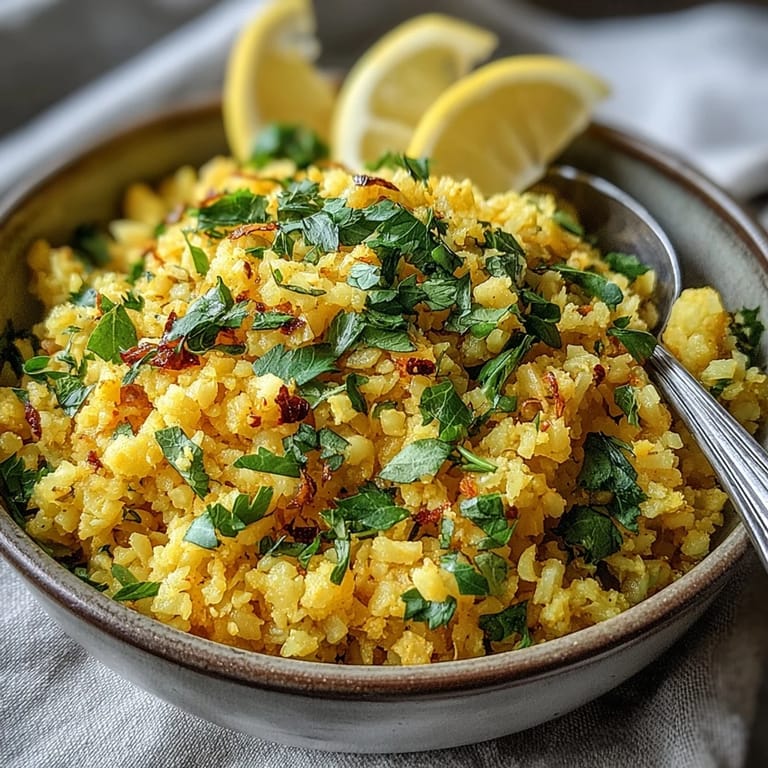
 Last week I made this for a friend who was recovering from surgery and couldn't stomach much of anything, and she ate two full bowls without being asked. There's something about the way the warm spices and bright lemon work together that feels both grounding and nourishing, like you're taking care of yourself without it feeling like a chore.
Making It Your Own
The beauty of this recipe is that it's genuinely flexible without falling apart. I've added everything from frozen peas (which warm through in the last minute) to diced bell peppers (which you should add with the onion so they don't stay crunchy) to baby spinach (which wilts into nothing in the best way). My current obsession is tossing in toasted slivered almonds at the very end for a textural contrast that makes it feel less like a side dish and more like something special.
Serving and Pairing Possibilities
This rice shows up on my table most often as the base for curries, where it soaks up all the sauce like a golden sponge. But it's equally comfortable next to grilled fish, roasted chicken thighs, or even plant-based proteins if you're eating that way. I've even packed it into containers for lunch bowls, layered with roasted vegetables and a dollop of tahini, and it's held up beautifully in the fridge for three days.
Storage and Make-Ahead Wisdom
This dish lives comfortably in the refrigerator for up to four days in an airtight container, and reheats gently in a skillet with a splash of water if it's lost some moisture. You can even prep the riced cauliflower and mince your aromatics the night before, storing them separately so that when dinner time hits, you're literally just cooking instead of prepping.
- If you're meal prepping, wait to add the lemon juice and fresh herbs until just before serving so they don't turn tired and bitter.
- Frozen riced cauliflower works in a pinch, though it releases more water so you might need to drain it partway through cooking.
- Double the batch without worrying—leftovers are somehow better the next day once all the flavors have settled into each other.
 Pin it
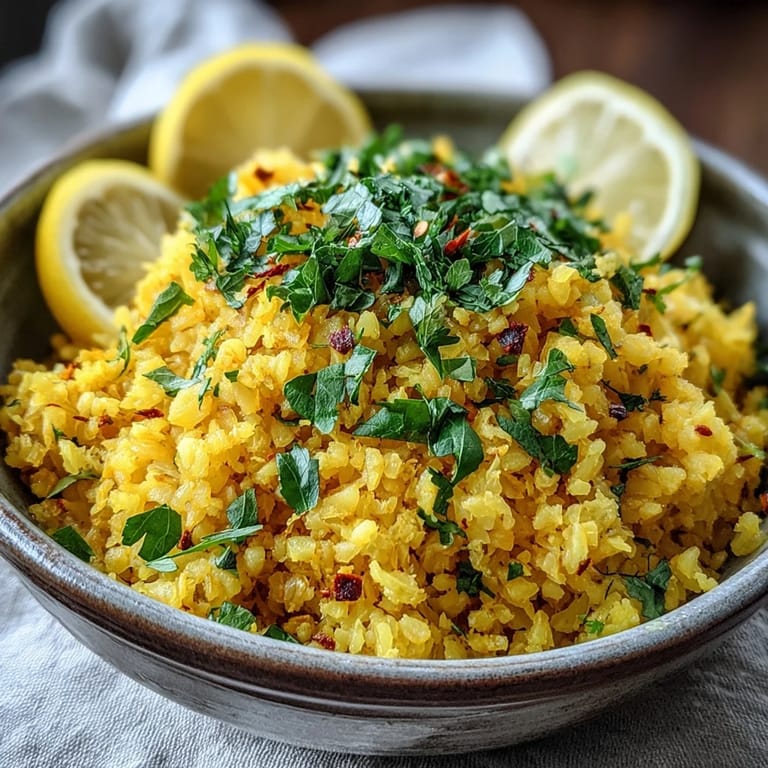
 This recipe has quietly become the side dish I reach for when I want something that feels nourishing without being precious about it. Make it once and you'll understand why it keeps showing up on my table.
Recipe FAQs
- → What does turmeric cauliflower rice taste like?
The dish has a mild, slightly nutty flavor from the cauliflower with earthy, warm notes from the turmeric and cumin. The lemon juice adds brightness while fresh herbs bring a pop of freshness. It's lighter than traditional rice but equally satisfying.
- → Is cauliflower rice actually healthy?
Absolutely. This version is naturally low in calories and carbohydrates while being rich in fiber and vitamins. The turmeric adds powerful anti-inflammatory compounds called curcuminoids, making it both nutritious and beneficial for overall health.
- → Can I make cauliflower rice without a food processor?
Yes. You can use a box grater to shred the cauliflower florets into rice-sized pieces. Alternatively, many grocery stores sell pre-riced cauliflower in the produce section, which cuts preparation time significantly.
- → How long does leftover cauliflower rice keep?
Store cooled leftovers in an airtight container in the refrigerator for up to 4 days. Reheat gently in a skillet with a splash of water or oil. The texture may soften slightly but will still be delicious.
- → What proteins pair well with this dish?
This versatile side complements grilled chicken, baked fish, lentil curries, or roasted chickpeas beautifully. It also works as a base for grain bowls with tofu, tempeh, or your favorite protein.
- → Can I freeze turmeric cauliflower rice?
Yes. Allow the cooked cauliflower to cool completely, then transfer to freezer-safe bags or containers. Freeze for up to 2 months. Thaw overnight in the refrigerator before reheating.