 Pin it
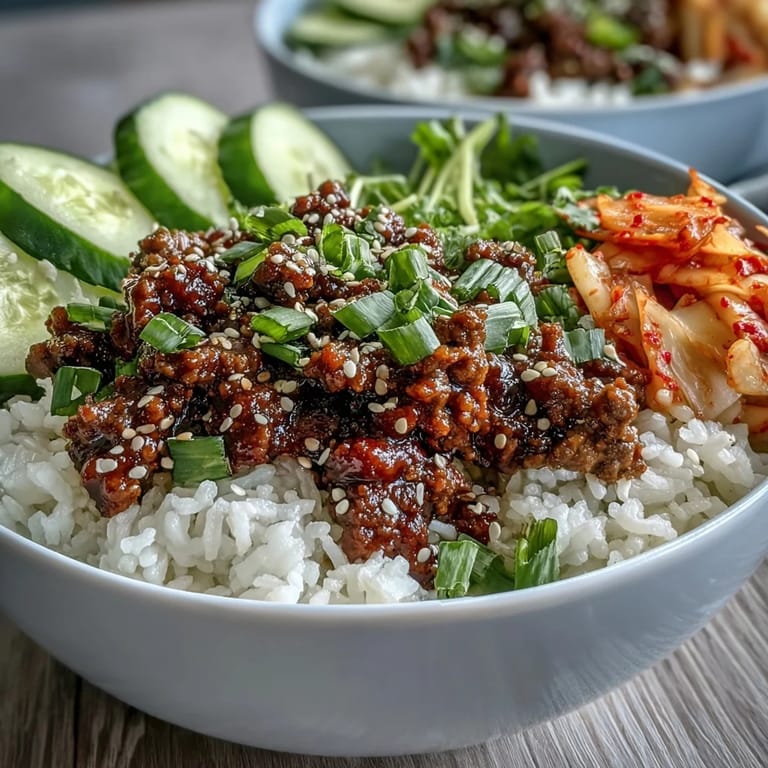
 A vibrant and flavorful bowl featuring seasoned ground beef in spicy gochujang sauce, served over steamed rice and topped with quick-pickled vegetables, crisp cucumber, radish, and tangy kimchi.
Pin it The secret to this bowl lies in the quick-pickled carrots and daikon, which provide a bright, vinegar-based crunch that perfectly cuts through the richness of the beef. Each component is designed to offer a different texture and flavor profile, resulting in a cohesive and satisfying meal that feels like restaurant quality at home.
Ingredients
Tired of Takeout? 🥡
Get 10 meals you can make faster than delivery arrives. Seriously.
One email. No spam. Unsubscribe anytime.
- For the Beef
- 1 lb (450 g) lean ground beef
- 2 tbsp vegetable oil
- 3 cloves garlic, minced
- 1 tbsp fresh ginger, grated
- 3 tbsp gochujang (Korean chili paste)
- 2 tbsp soy sauce
- 1 tbsp brown sugar
- 1 tbsp rice vinegar
- 1 tsp toasted sesame oil
- 2 green onions, thinly sliced
- For the Pickled Vegetables
- 1/2 cup (60 g) carrot, julienned
- 1/2 cup (60 g) daikon radish, julienned
- 1/2 cup (120 ml) rice vinegar
- 1 tbsp sugar
- 1/2 tsp salt
- For Serving
- 4 cups cooked white rice (or brown rice)
- 1 cup cucumber, thinly sliced
- 1/2 cup radish, thinly sliced
- 1 cup kimchi, chopped
- 1 tbsp toasted sesame seeds
Instructions
- 1. Prepare the Pickled Vegetables
- In a small bowl, combine the rice vinegar, sugar, and salt. Stir until dissolved. Add the carrot and daikon radish. Mix well and set aside to pickle while you prepare the rest of the dish.
- 2. Cook the Beef
- Heat vegetable oil in a large skillet over medium-high heat. Add garlic and ginger, sauté for 1 minute until fragrant. Add ground beef and cook, breaking it up with a spoon, until browned and cooked through (about 5–6 minutes). Drain excess fat if needed.
- 3. Season the Beef
- Stir in the gochujang, soy sauce, brown sugar, rice vinegar, and sesame oil. Cook for another 2–3 minutes, allowing the sauce to thicken and coat the beef. Remove from heat and stir in half the green onions.
- 4. Assemble the Bowls
- Divide the cooked rice among 4 bowls. Top each with a generous portion of the beef mixture. Arrange pickled vegetables, cucumber, radish, and kimchi around the beef. Garnish with remaining green onions and toasted sesame seeds.
- 5. Serve
- Serve immediately.
Zusatztipps für die Zubereitung
For extra heat, add a drizzle of sriracha or extra gochujang. You can also substitute the ground beef with ground chicken or turkey if desired for a lighter option.
Varianten und Anpassungen
For a gluten-free version, use tamari instead of soy sauce and ensure the gochujang is gluten-free. Always verify ingredient labels for potential allergens like soy or sesame.
Serviervorschläge
This vibrant bowl pairs wonderfully with a light, crisp lager or a cup of chilled green tea to complement the spicy and tangy notes.
 Pin it
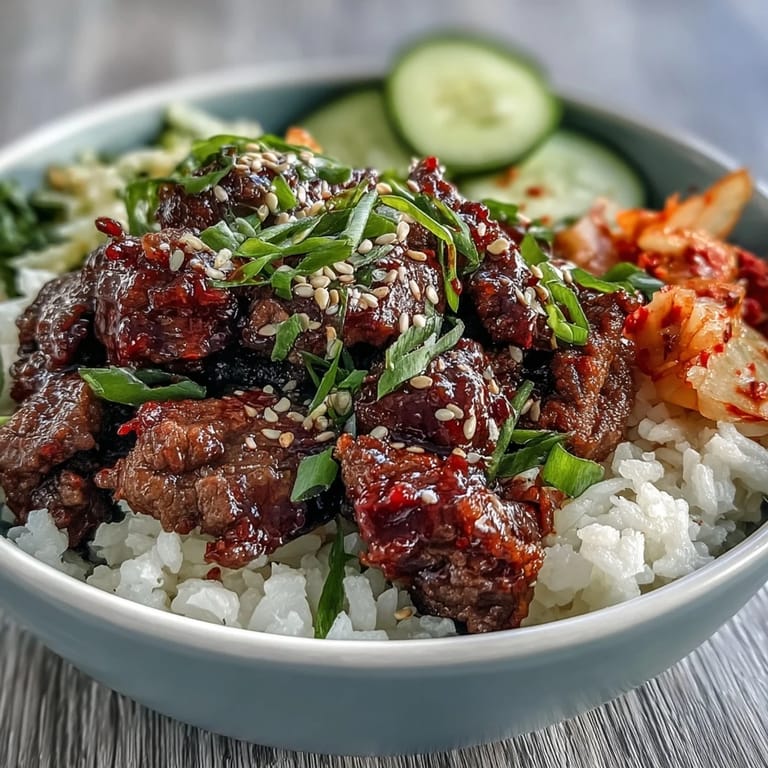
 Whether you're looking for a fast weeknight meal or a flavorful meal prep option, this Korean Beef Bowl brings bold, savory, and spicy satisfaction in every forkful. Enjoy your delicious homemade meal!
Recipe FAQs
- → How spicy is this bowl?
The heat level depends on your gochujang paste. It typically provides a medium spice that's flavorful without being overpowering. Adjust by adding more or less paste.
- → Can I make this ahead?
The beef mixture reheats beautifully and can be stored in the refrigerator for up to 4 days. Keep pickled vegetables separate for best texture.
- → What protein alternatives work?
Ground chicken or turkey are excellent substitutes. For a vegetarian version, use crumbled tofu or plant-based ground meat alternative.
- → Can I freeze this?
The seasoned beef freezes well for up to 3 months. Thaw overnight and reheat gently. Rice and fresh toppings are best added after reheating.
- → What rice works best?
Short-grain white rice is traditional, but brown rice adds nutty flavor and extra fiber. Jasmine rice also works wonderfully with these Korean flavors.
- → Is this gluten-free?
Use tamari instead of soy sauce and verify your gochujang is gluten-free. Many traditional brands contain wheat, but gluten-free options are available.