 Pin it
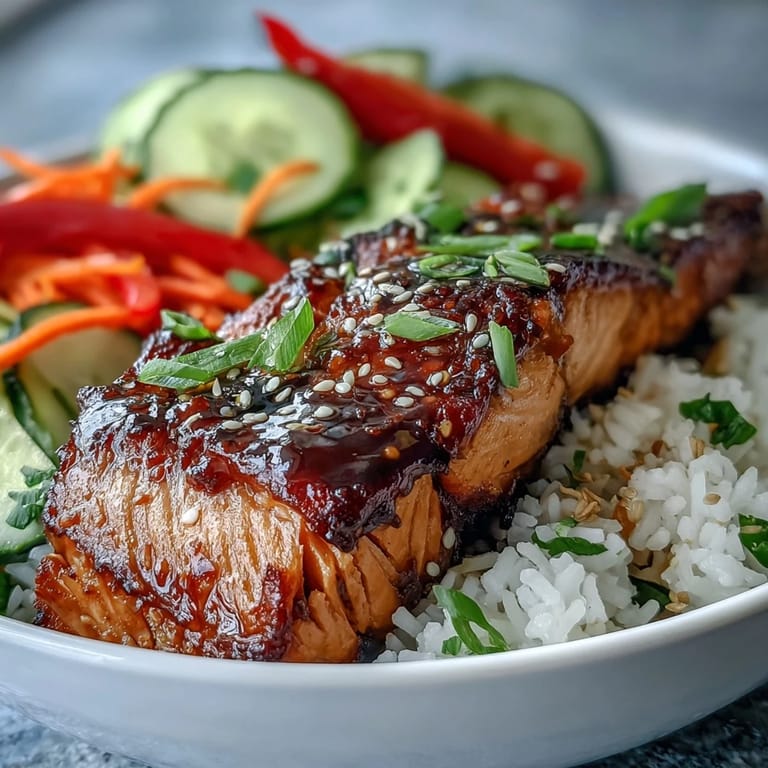
 My friend Sarah showed up at my door one Tuesday with a tired smile and said she'd been craving something that felt both comforting and energizing. I'd just learned how to make a proper soy-ginger glaze that week, and watching her face light up when I placed that luminous bowl in front of her—the salmon glistening, the vegetables catching the light—was the moment I realized this wasn't just dinner, it was exactly what she needed. Since then, this bowl has become my go-to when I want to feel like I've nailed something without spending hours in the kitchen.
I made this for my colleague Marcus on a Friday when he mentioned trying to eat better, and he came back the next Monday saying he'd made it three times already. Seeing someone genuinely excited about cooking something I shared felt different than just hearing it was good—it meant the recipe was actually foolproof enough that someone busy and skeptical could pull it off and feel proud.
Ingredients
- Salmon fillets: Look for firm flesh with a slight sheen; about 150 grams each ensures they cook evenly without drying out.
- Soy sauce: The backbone of your glaze, but don't skip the rice vinegar—it brightens everything and keeps the sauce from tasting one-note.
- Fresh ginger: This is where the magic lives; grated fresh ginger adds a living heat that powdered can't touch.
- Honey: Balances the saltiness and helps the glaze caramelize slightly in the oven.
- Sesame oil: A little goes a long way; it's the whisper of nuttiness that makes people ask what your secret ingredient is.
- Jasmine or sushi rice: Jasmine rice stays fluffy and doesn't clump, making assembly easier and the bowl actually pleasant to eat.
- Fresh vegetables: Julienne them just before serving so they stay crisp; this is one place where meal prep the day before backfires.
- Edamame: Adds protein and a pop of color; buy them pre-shelled and cooked if you value your sanity.
- Sesame seeds: Toast them yourself if you have five minutes; the difference between toasted and raw is honestly life-changing.
- Scallions: The final flourish that makes everything feel intentional and finished.
Tired of Takeout? 🥡
Get 10 meals you can make faster than delivery arrives. Seriously.
One email. No spam. Unsubscribe anytime.
Instructions
- Start your rice right:
- Rinsing the rice removes excess starch and gives you that separate, fluffy texture. As the rice comes to a boil, you'll hear the water hissing—that's your cue to drop the heat to low and cover it.
- Build your glaze:
- Whisk everything together in a small bowl and taste it; you should get salty, sweet, sour, and spicy all at once. If it tastes too sharp, a drop of honey smooths it out.
- Prepare your baking station:
- Parchment paper isn't just convenient—it keeps the salmon from sticking and the cleanup is almost insulting in how easy it becomes. Preheat to 400°F so the salmon hits the heat at the right moment.
- Glaze and bake:
- Brush the salmon generously, then slide it into the oven and set a timer. At about 12 minutes, the edges will look slightly darker and the flesh will flake when you press it gently with a fork.
- Finish your glaze:
- Pour the reserved glaze into a small pot and let it warm through, stirring occasionally. If it seems thin, the cornstarch trick thickens it perfectly, but honestly, thin glaze isn't a disaster.
- Julienne your vegetables:
- While the salmon cooks, slice your vegetables into thin matchsticks. A sharp knife and a confident hand make this feel less like work and more like meditation.
- Assemble with intention:
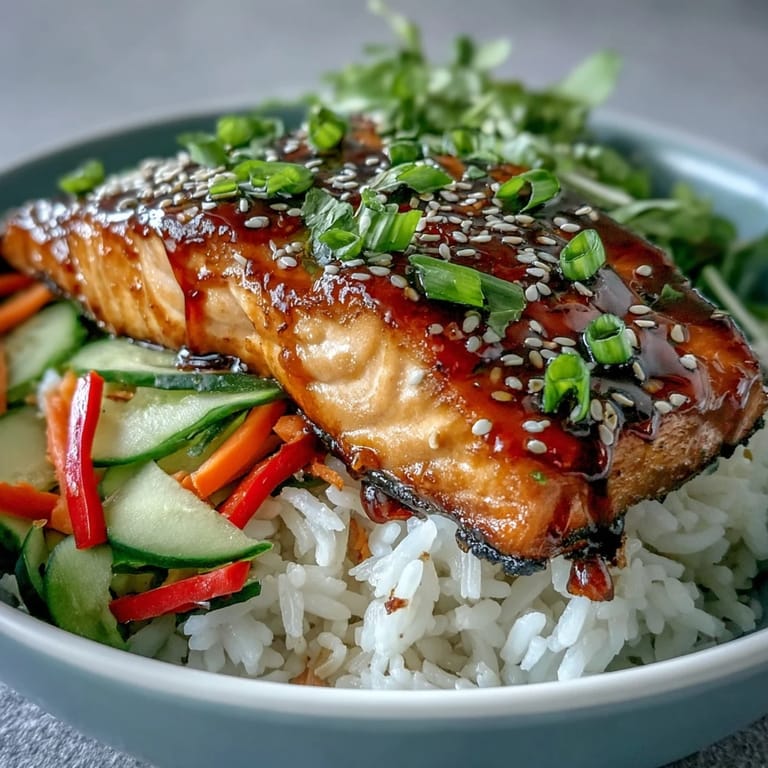
- Start with rice as your base, then arrange the salmon off-center so you can see all the colorful vegetables. Drizzle glaze over everything, and let the sesame seeds and scallions be the last thing that touches the bowl.
 Pin it
 There's something about watching someone eat a bowl you've made where every element is visible and bright, where they can taste the care in how you balanced the glaze and arranged the vegetables. That moment when they look up and smile before saying anything is when you know you've created something that nourishes more than just hunger.
The Secret to Perfect Glazed Salmon
The glaze is the entire reason this works, and it's deceptively simple. The balance matters more than any fancy technique—soy sauce gives you salt and umami, honey adds sweetness, ginger brings heat, and vinegar cuts through everything with brightness. I learned the hard way that trying to make the glaze too thick ahead of time meant it hardened and became cloyingly sweet. Keeping it loose and letting it warm gently right before serving means it clings to the salmon in that perfect, glossy way.
Why This Bowl Feels Special
Bowls feel like a trend, but there's something genuinely thoughtful about them. You're not stacking things on a plate where they slide around; you're creating a contained world where every vegetable stays where you put it. The warmth of the rice and salmon contrasts with the cool, crisp vegetables, and your palate gets a surprise with every spoonful. I've noticed that when food is visually organized and makes sense on the plate, people eat slower and actually taste it rather than just consuming it.
Making It Your Own
This bowl is a canvas that genuinely welcomes changes without falling apart. I've added avocado when I had one sitting on the counter, swapped in pickled ginger when I wanted more acidity, and even used leftover roasted broccoli when vegetables were running low. Brown rice works if you want more texture, quinoa if you want to impress someone with dietary restrictions, and the entire thing tastes just as right. Here's what you should remember for your version:
- The glaze is flexible—if you prefer it spicier, add a touch of sriracha; if you want it deeper, a splash more soy sauce never hurts.
- Toasted seeds and fresh scallions matter far more than you'd think for making this feel finished and intentional.
- Prep your vegetables right before serving so they stay crisp and the whole bowl stays bright.
 Pin it
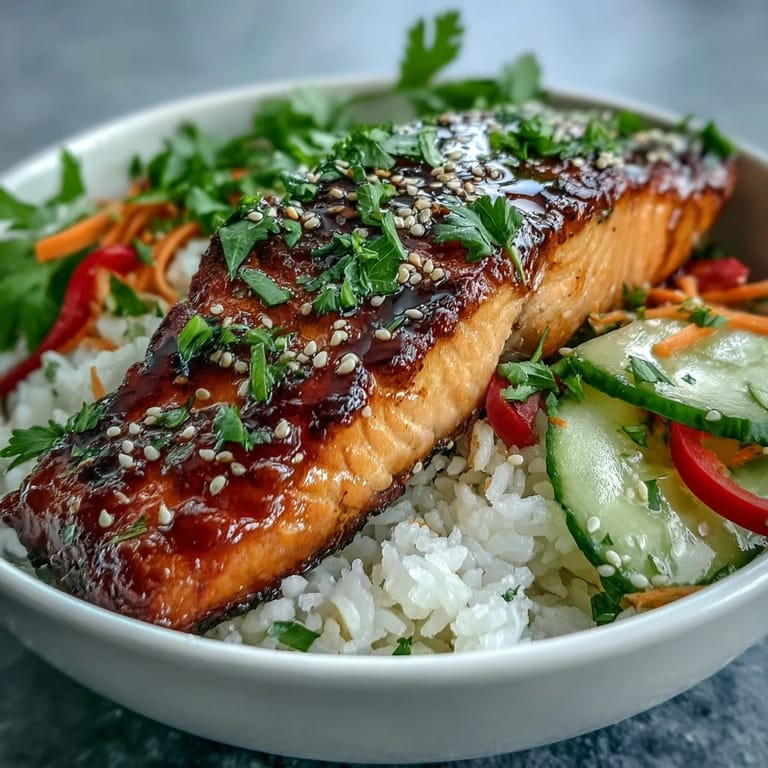
 This bowl lives in my rotation because it works whether you're feeding yourself on a busy Wednesday or impressing someone at the table. It's the kind of recipe that makes cooking feel effortless even when you're still learning.
Recipe FAQs
- → Can I use other types of fish?
Yes, you can substitute salmon with other firm fish like cod, halibut, or mahi-mahi. Adjust cooking time as thinner fillets may cook faster.
- → How do I julienne vegetables?
Cut vegetables into long, thin strips about 2-3 inches long and 1/8 inch thick. A sharp knife or mandoline slicer works best for achieving uniform, professional-looking cuts.
- → Can I make this ahead of time?
You can prepare the glaze and vegetables up to a day in advance. Store them separately in airtight containers in the refrigerator. Cook salmon and rice fresh for best results.
- → What can I use instead of rice?
Brown rice, quinoa, cauliflower rice, or noodles work well as alternatives. Adjust cooking times accordingly for your chosen base.
- → Is this gluten-free?
To make gluten-free, simply replace regular soy sauce with tamari or a certified gluten-free soy sauce alternative. All other ingredients are naturally gluten-free.
- → How do I store leftovers?
Store components separately in airtight containers for up to 2 days. Reheat salmon gently in the microwave or oven. Rice and vegetables can be served cold or at room temperature.