 Pin it
 There's something about assembling a Greek salad that transports me straight to a sun-drenched taverna overlooking the Aegean, except I'm standing in my kitchen with the window cracked open and a breeze carrying in the smell of basil from the neighbor's garden. My first real Greek salad came together almost by accident during a sweltering summer when I had nothing but odds and ends in the fridge and a sudden craving for something bright and uncomplicated. The beauty of this bowl is that it asks nothing of you except good ingredients and a willingness to let them speak for themselves.
I once made this salad for a dinner party where I was running three hours behind, and honestly, it saved me. While the main dish was still a work in progress, I set this bowl on the table with some crusty bread, and my guests started eating before I'd even finished plating everything else. That's when I realized the best meals sometimes arrive when you stop overthinking and just let quality ingredients do the work.
Ingredients
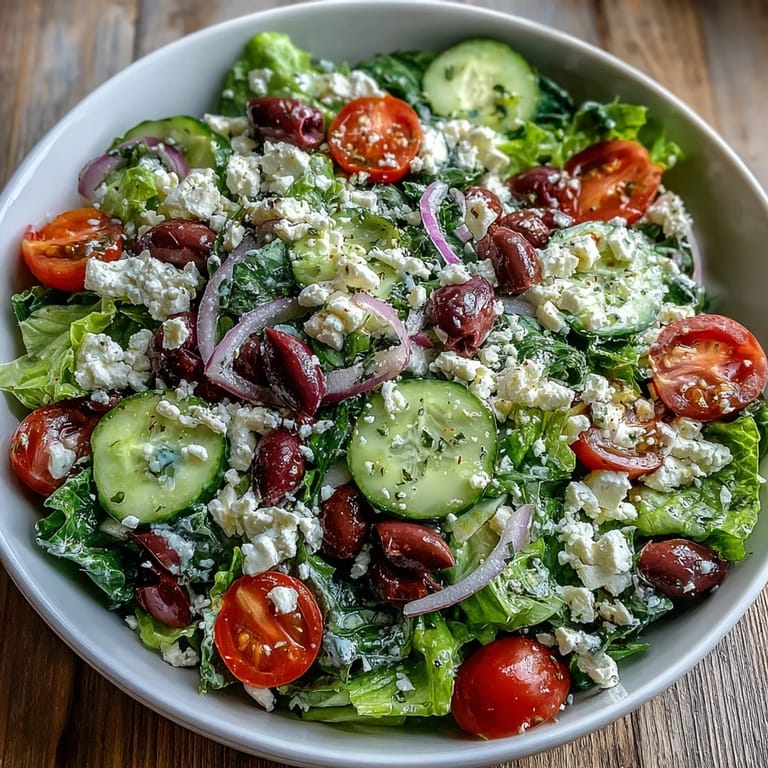
- Romaine lettuce: Look for heads with a tight, pale center—that's where the sweetest, crispest leaves hide; chop it just before assembling so it stays snappy.
- Cherry tomatoes: Use ones that feel heavy for their size and have a deep color; halving them releases their juices into the dressing naturally.
- Cucumber: English cucumbers have thinner skins and fewer seeds, but any fresh cucumber works; slice thin enough to bend slightly but thick enough to hold their shape.
- Red onion: The bite mellows as it sits with the acidic vinegar, transforming from sharp to almost sweet; slice it paper-thin for the best texture.
- Feta cheese: Buy it in a block if you can and crumble it yourself—the irregular chunks hold onto the dressing better than pre-crumbled versions.
- Kalamata olives: Pit them yourself if they're not already pitted; the flavor is noticeably deeper and more nuanced.
- Extra-virgin olive oil: This is where you splurge; a good oil makes the entire vinaigrette sing with fruity, peppery notes.
- Red wine vinegar: It brings a gentle sharpness that doesn't overpower; if it tastes too intense on its own, that's exactly what you want.
- Dried oregano: Crush it between your fingers as you add it to release the oils and intensify the flavor.
- Garlic: Mince it fine so it disperses evenly throughout the dressing instead of lurking in harsh chunks.
- Dijon mustard: This small amount acts as an emulsifier, helping the oil and vinegar stay together rather than separating.
Tired of Takeout? 🥡
Get 10 meals you can make faster than delivery arrives. Seriously.
One email. No spam. Unsubscribe anytime.
Instructions
- Start with your greens:
- Tear or chop your romaine into bite-sized pieces and pile it into your large bowl. This is your foundation, and it should look generous—there's nothing worse than a salad where you run out of lettuce halfway through.
- Build your vegetable layers:
- Scatter the cherry tomatoes, cucumber, and red onion over the lettuce in no particular order. The goal here is a mix of colors and textures that feels abundant, not organized.
- Crown it with cheese and olives:
- Sprinkle the crumbled feta and halved olives evenly across the top. Don't be shy—these are the flavor anchors, and they deserve a prominent place.
- Prepare the vinaigrette:
- In a small bowl or jar, whisk together the olive oil, red wine vinegar, oregano, minced garlic, Dijon mustard, salt, and pepper. You'll feel the mixture tighten and thicken slightly as the mustard does its emulsifying work—that's when you know it's right.
- Dress just before serving:
- Drizzle the vinaigrette over the salad in a thin stream, then use two large spoons or your hands to toss everything gently until each piece glistens. Tossing too early means the lettuce wilts and the tomatoes leak everywhere, so wait until the last possible moment.
 Pin it
 I had a moment once where I served this salad to my grandmother, who'd lived in Athens for years, and I was terrified she'd judge my interpretation. She took one bite and smiled without saying much, which somehow meant more than any compliment could have. That's when I understood this salad isn't about perfection—it's about honoring simple things done well.
The Mediterranean Way
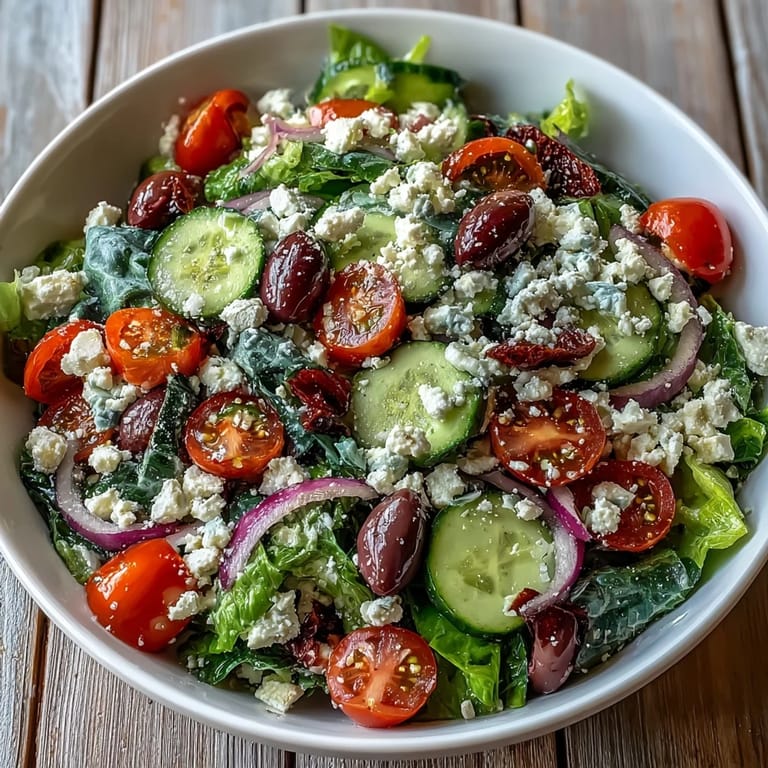
This salad isn't trying to impress you with complexity; it's the kind of dish that Greeks have been eating for generations because it works. The combination of textures—crisp lettuce, juicy tomatoes, creamy feta—keeps your palate interested throughout the meal. It's substantial enough to stand alone as lunch but humble enough to make room for other dishes at dinner. The beauty is in the restraint, in knowing when to stop adding and trust that what you have is already enough.
Vinaigrette Secrets
The vinaigrette is where the magic lives, and it's deceptively simple if you understand what each ingredient does. The olive oil carries flavor and creates richness, the vinegar provides acidity and brightness, the garlic and oregano add aromatic depth, and the mustard acts as the glue that holds everything together. I learned this the hard way by making too many vinaigrettes that separated within minutes, looking like a science experiment instead of dressing. The moment I started whisking in the mustard first, before adding the oil, everything changed.
Beyond the Basic Bowl
Once you understand this basic formula, you can play with it without losing what makes it work. A handful of fresh dill adds an unexpected brightness, sliced bell peppers bring sweetness and crunch, and a scatter of croutons can turn it into something that feels more like a main course. Some mornings I make it with grilled chicken breast for leftovers, and some evenings I double the feta and add crumbled walnuts when I want something more textured. The salad is forgiving enough to welcome your ideas while staying true to its roots.
- Serve this alongside warm pita bread and you've got a complete meal that satisfies without feeling heavy.
- Leftovers work best when you keep the vinaigrette separate and dress individual portions as you eat them.
- Make a double batch of vinaigrette and keep it in a jar in the fridge for quick salads all week.
 Pin it
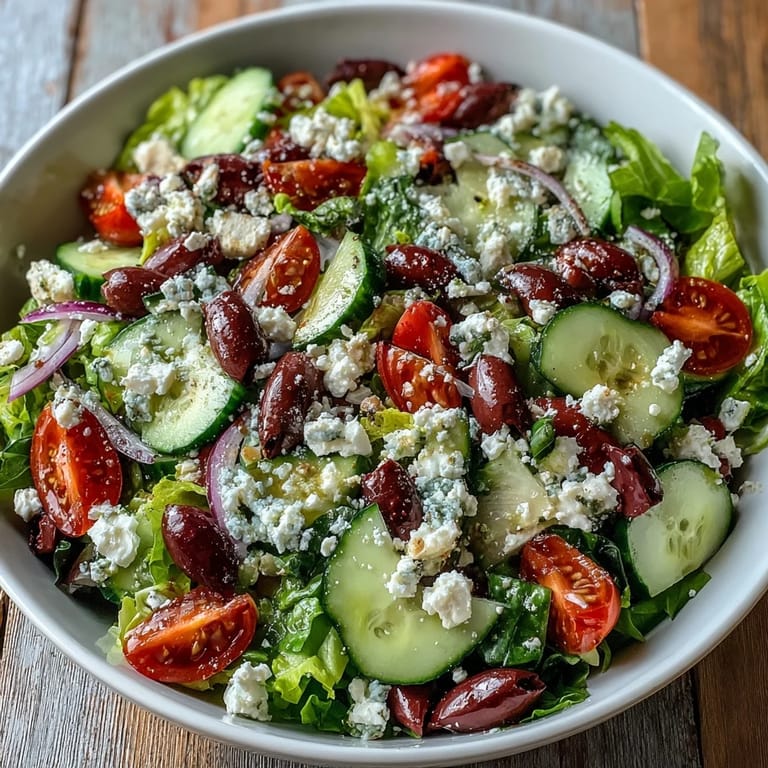
 A good Greek salad feels like a conversation—balanced, unhurried, and better when you take your time with it. Make this when you want something nourishing without fuss, and watch how simple ingredients become something unforgettable.
Recipe FAQs
- → How long does Greek salad stay fresh?
The dressed salad stays fresh for 2-3 hours at room temperature. For best results, store the vinaigrette separately and toss just before serving—this keeps the vegetables crisp and prevents sogginess.
- → Can I make Greek salad ahead of time?
Prep the vegetables and vinaigrette up to 24 hours in advance, storing them in separate airtight containers. Combine when ready to serve to maintain optimal texture and flavor.
- → What cheese works best in this bowl?
Traditional Greek feta delivers the authentic tangy, salty flavor profile. Sheep's milk feta offers the creamiest texture, while goat's milk versions provide a sharper taste.
- → How do I properly slice the vegetables?
Cut cherry tomatoes in half for easy eating. Slice cucumbers into thin rounds or half-moons. Thinly shave the red onion to distribute its sharp flavor evenly throughout the bowl.
- → What variations can I add to this bowl?
Incorporate bell peppers, radishes, or avocado for extra crunch. Grilled chicken, chickpeas, or quinoa transform it into a complete meal. Fresh herbs like dill or parsley brighten the flavors.
- → Is this dish suitable for specific diets?
Yes—it's naturally vegetarian and gluten-free. For dairy-free needs, substitute with vegan feta alternatives. The whole-food ingredients fit Mediterranean diet guidelines perfectly.