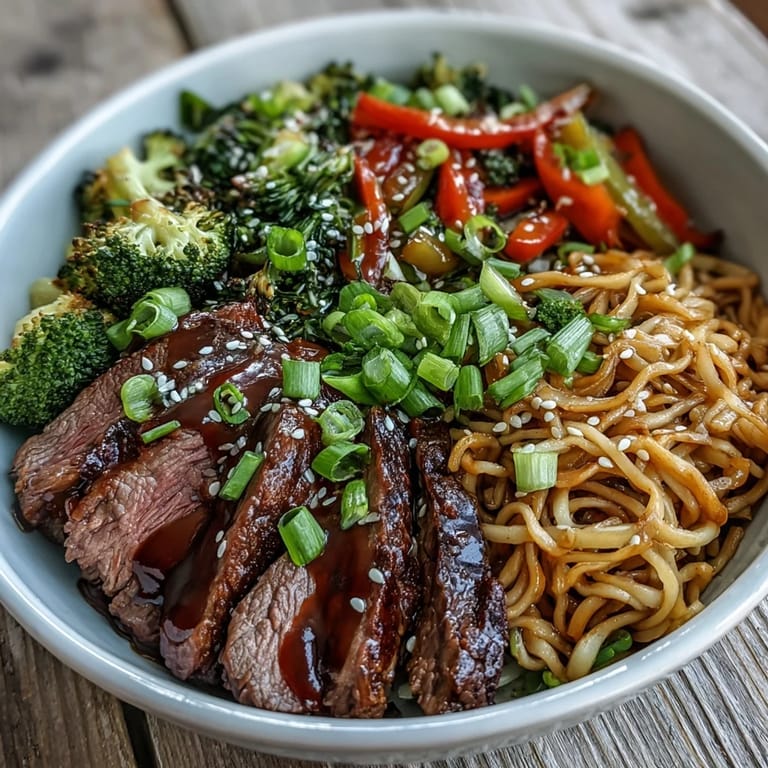
 Pin it
 One rainy Tuesday, I stood at my stove watching steam curl off a skillet while my stomach growled. I'd grabbed flank steak on a whim, and suddenly the idea of tangled noodles and crisp vegetables felt urgent. The sizzle when the beef hit hot oil made my kitchen smell like a street market I'd wandered through years ago. That night, I learned how fast comfort can come together when you let garlic and ginger do the talking.
I made this for my neighbor after her kitchen flooded, carrying the bowl across the hallway still warm. She texted me two hours later asking for the recipe, then admitted she'd eaten it straight from the container standing at her counter. That's when I realized this dish doesn't need ceremony or perfect plating. It just needs to land in front of someone hungry, and it does the rest on its own.
Ingredients
- Rice noodles: These silky strands soak up sauce without turning mushy, and they cook faster than you can chop your vegetables if you use boiling water.
- Flank steak: Slicing against the grain is the difference between tender bites and a jaw workout, so take thirty seconds to find those muscle lines before you cut.
- Broccoli florets: They add crunch and a slight bitterness that balances the sweet sauce, plus they hold their shape even when the skillet gets crowded.
- Bell pepper: Red or yellow peppers bring sweetness and a pop of color that makes the bowl look alive, not drab.
- Carrot: Julienned carrots cook quickly and their natural sugar caramelizes just enough to add another layer of flavor.
- Green onions: Chopped fresh at the end, they deliver a sharp, grassy note that cuts through the richness.
- Garlic and ginger: Minced and grated, these aromatics bloom in hot oil and perfume the entire dish within seconds.
- Soy sauce: The salty backbone of the sauce, it deepens every other flavor and gives the noodles that unmistakable umami gloss.
- Brown sugar: Just enough to round out the saltiness and create a glossy coating that clings to the beef and noodles.
- Sesame oil: A few drops add nutty warmth and make the whole skillet smell like a celebration.
- Vegetable oil: High smoke point means you can crank the heat without setting off your smoke alarm.
- Sesame seeds: Toasted or raw, they add a delicate crunch and a visual cue that the dish is ready to devour.
Tired of Takeout? 🥡
Get 10 meals you can make faster than delivery arrives. Seriously.
One email. No spam. Unsubscribe anytime.
Instructions
- Soften the noodles:
- Boil water and cook the rice noodles according to package directions, usually about four minutes, then drain and rinse them under cool water to stop the cooking. This prevents them from clumping into a sticky mass while you prep everything else.
- Sear the beef:
- Heat vegetable oil in a large skillet or wok over medium-high heat until it shimmers, then add the thinly sliced flank steak in a single layer and let it sizzle undisturbed for about two minutes before stirring. You want a golden-brown crust on the meat, so resist the urge to toss it around too soon, then remove it to a plate.
- Bloom the aromatics:
- In the same skillet, toss in minced garlic and grated ginger, stirring constantly for about thirty seconds until the fragrance hits your nose and the garlic just starts to turn golden. This brief moment unlocks all the flavor, but go any longer and you'll taste bitterness instead of warmth.
- Stir-fry the vegetables:
- Add broccoli florets, sliced bell pepper, and julienned carrot to the skillet, then stir-fry for about five minutes, keeping everything moving so it cooks evenly. The vegetables should soften but still snap when you bite them, which means they're done at the exact moment they turn bright and glossy.
- Mix the sauce:
- While the vegetables cook, whisk together soy sauce, brown sugar, and sesame oil in a small bowl, stirring until the sugar dissolves completely. This only takes a minute, and having it ready means you won't scramble later when the skillet is hot and everything is moving fast.
- Combine beef and sauce:
- Return the seared beef to the skillet, then pour the sauce over the beef and vegetables, stirring to coat everything in that glossy, fragrant mixture. The sauce will bubble and thicken slightly as it heats, clinging to every surface and filling your kitchen with a sweet-savory aroma.
- Toss in the noodles:
- Add the cooked rice noodles to the skillet and use tongs or a spatula to gently toss everything together, making sure the noodles get evenly coated and heated through. This takes about two minutes, and you'll know it's ready when the noodles glisten and every strand separates cleanly.
- Garnish and serve:
- Transfer everything to bowls, then sprinkle chopped green onions and sesame seeds over the top for a fresh, crunchy finish. Serve immediately while the noodles are still steaming and the vegetables are at their crispest.
 Pin it
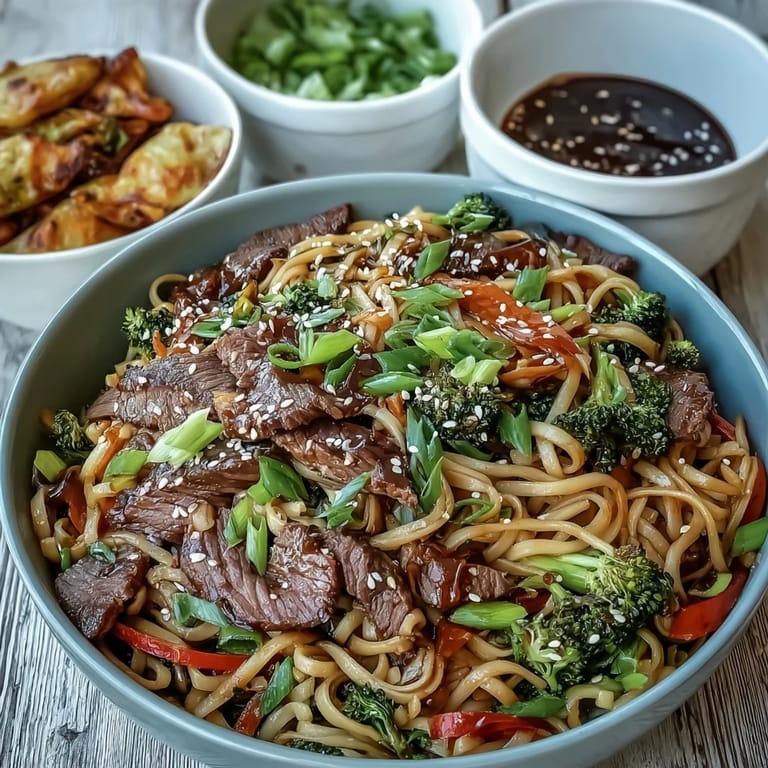
 The first time I served this to my brother, he scraped his bowl clean and asked if I'd taken a cooking class. I laughed because I'd thrown it together in under forty minutes, mostly guided by instinct and a craving. That's when I understood that some recipes don't need perfection or fancy techniques. They just need bold flavors and a willingness to trust the sizzle.
Making It Your Own
I've stirred snap peas and zucchini into the skillet when my crisper drawer was overflowing, and the dish absorbed them without complaint. If you want heat, whisk a spoonful of gochujang or sriracha into the sauce and watch the flavors shift from sweet to fiery. Swapping flank steak for chicken thighs or pressed tofu works beautifully, and each protein brings its own texture and richness to the noodles. The recipe bends easily, so don't be afraid to improvise based on what's in your fridge or what your mood demands.
Storing and Reheating
Leftovers keep in an airtight container in the fridge for up to three days, though the noodles will absorb some sauce as they sit. When you reheat, add a splash of water or soy sauce to the skillet and warm everything over medium heat, stirring gently to loosen the noodles. I've also eaten this cold straight from the container for lunch, and it tastes almost as good as it did fresh. The vegetables soften a bit, but the flavors deepen overnight, so you're trading texture for a more concentrated taste.
Tools and Timing
A large skillet or wok is essential because it gives you the surface area to stir-fry without steaming the vegetables, and high heat is your friend here. You'll also need a saucepan for the noodles, a sharp chef's knife for slicing the beef and vegetables, and tongs or a spatula to toss everything together. The entire process moves quickly once you start cooking, so have your ingredients prepped and within arm's reach before you turn on the stove.
- Prep all your vegetables and slice the beef before you start cooking, because once the skillet heats up, there's no time to pause.
- If your skillet isn't big enough, cook the beef and vegetables in batches to avoid overcrowding and losing that crucial sear.
- Taste the sauce before you pour it over the skillet, and adjust the sweetness or saltiness to match your preference.
 Pin it
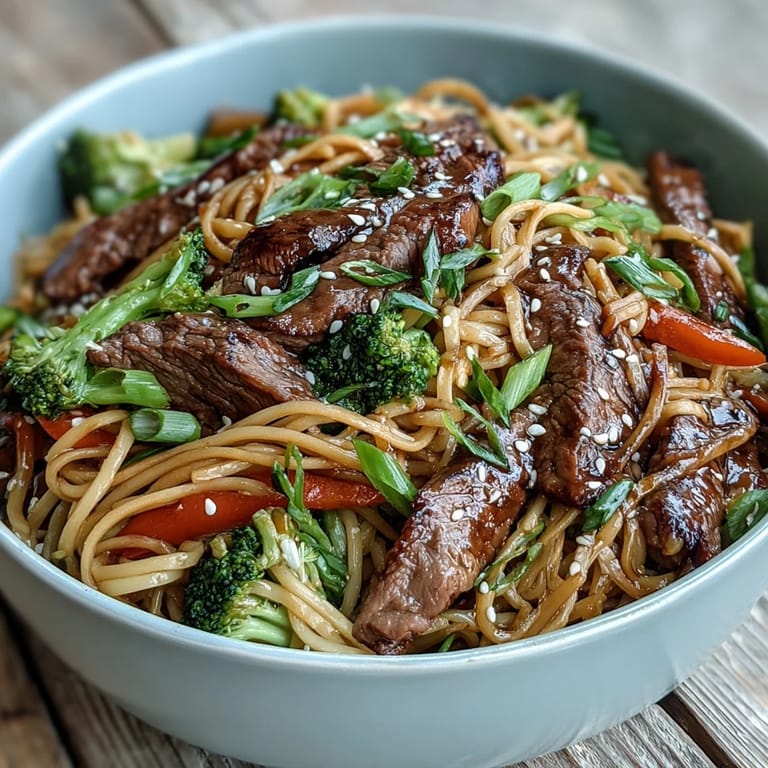
 Every time I make this, I remember that cooking doesn't have to be complicated to feel rewarding. The sizzle, the steam, the way the sauce coats every noodle, it all adds up to a bowl that feels like a small victory at the end of a long day.
Recipe FAQs
- → Can I use different noodles?
Rice noodles work best for their texture and ability to absorb the sauce. Thin rice vermicelli cooks faster, while wider rice noodles hold up well to stir-frying. Soba or udon noodles make tasty alternatives if you don't require a gluten-free dish.
- → How do I slice the beef properly?
Place the flank steak in the freezer for 20 minutes before slicing—it firms up the meat, making thin strips easier to cut. Slice against the grain at a 45-degree angle for maximum tenderness. Aim for strips about 1/8 to 1/4 inch thick.
- → Can I make it spicy?
Add sriracha directly into the sauce mixture for accessible heat. Korean gochujang paste delivers authentic fermented chili flavor and deeper complexity. Start with one teaspoon and adjust to your preference—sliced fresh chilies work as a garnish for extra kick.
- → What vegetables can I substitute?
Snap peas, zucchini, shiitake mushrooms, and baby corn all complement the Asian-inspired flavors. Bok choy adds nice crunch and cooks quickly. Use whatever crisp vegetables you have on hand, keeping total volume similar to the original recipe.
- → Can I prepare this ahead?
Slice the beef and vegetables up to a day in advance, storing them separately in the refrigerator. Mix the sauce ahead and keep it sealed. However, cook the noodles just before serving—they tend to clodge and dry out when stored cooked.
- → How do I prevent soggy noodles?
Undercook the rice noodles slightly by 1-2 minutes since they'll finish cooking in the skillet. Rinse them under cold water after draining to stop the cooking process and remove excess starch. Toss with a small amount of oil if waiting to add them to the dish.