 Pin it
 My wok has seen better days—the handle's loose, the seasoning's patchy—but it's been my partner through countless weeknight dinners when energy was low and time was lower. One evening, chopping vegetables with the kind of mindless rhythm that comes from pure fatigue, I realized the ginger I'd grated filled my whole kitchen with this warm, alive smell that somehow made everything feel manageable again. That's when this stir-fry became less about efficiency and more about the moment where fresh ingredients and a hot pan turn a rough day around.
I made this for my sister last spring when she was going through one of those stretches where cooking felt impossible but eating mattered more than usual. She sat at my kitchen counter while I stir-fried, the steam rising in these gentle clouds, and by the time I plated it she was already smiling—not at the food, but at the sound of it sizzling, at being in a kitchen where someone was taking care of the small things. We ate standing up, out of bowls, and it was exactly what we both needed.
Ingredients
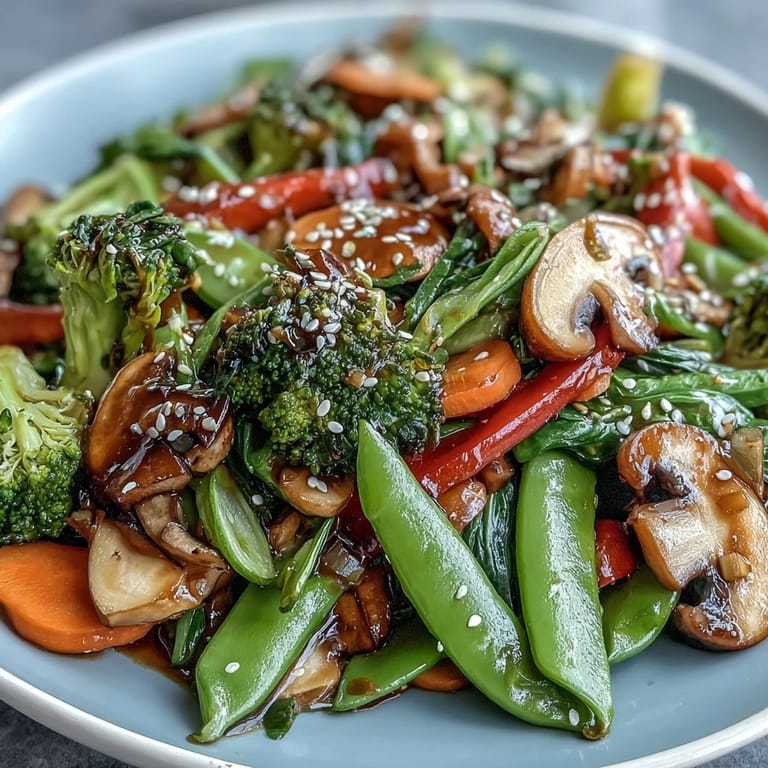
- Broccoli florets: Cut them smaller than you think—they cook faster and get these crispy edges that are honestly the best part.
- Sliced carrots: Go thin, almost bias-cut if you're feeling it; they soften just enough but stay snappy.
- Red bell pepper: The sweetness balances the soy and ginger beautifully, and the color doesn't hurt either.
- Snap peas: These are your texture insurance—they stay crisp no matter what, so they're foolproof.
- Yellow onion: Thin slices mean they mellow out instead of overpowering everything else on the plate.
- Sliced mushrooms: They soak up the sauce like little sponges and add this earthy depth that ties the whole dish together.
- Fresh ginger: This is non-negotiable—grate it yourself, and you'll taste the difference in how alive and complex the dish becomes compared to anything pre-minced.
- Garlic cloves: Three is the sweet spot; any less and you lose that savory backbone, any more and it gets sharp.
- Soy sauce: Use tamari if gluten matters to you, but either way, this is what gives the whole thing its soul.
- Sesame oil: Just a tablespoon—it's assertive, so respect it; drizzle it in near the end so the heat doesn't flatten its nutty personality.
- Vegetable oil: This does the real cooking work; sesame oil alone would burn and turn bitter.
- Rice vinegar: A whisper of acid that keeps everything tasting fresh instead of heavy.
- Maple syrup or honey: A teaspoon rounds out the sauce so it's not all salt and heat—it becomes balanced, almost silky.
- Red pepper flakes: Optional, but I keep them in unless someone's dining with me who prefers their food gentle.
- Green onions: Scatter them last; they're your final bright note, fresh and oniony and alive.
- Toasted sesame seeds: They add this nutty crunch that makes people think you tried harder than you actually did.
Tired of Takeout? 🥡
Get 10 meals you can make faster than delivery arrives. Seriously.
One email. No spam. Unsubscribe anytime.
Instructions
- Build Your Sauce:
- Whisk soy sauce, rice vinegar, maple syrup, and red pepper flakes together in a small bowl—this takes maybe a minute and changes everything because you're not fumbling with measurements over a hot pan later. Set it aside somewhere you won't forget it.
- Get Your Pan Hot:
- Pour both oils into your wok or large skillet and let them heat over medium-high until the oil moves quickly when you tilt the pan—you're looking for that shimmer, not smoke. This is your cue that you're ready to go.
- Wake Up the Aromatics:
- Toss in the ginger and garlic and stir constantly for about 30 seconds; your kitchen will suddenly smell like a restaurant, and you'll know it worked. Don't walk away—this is the moment that sets the tone for everything else.
- Start with the Slow Vegetables:
- Add onion, carrots, and broccoli—these need the most time, so they go in first. Stir-fry for 2 to 3 minutes until the broccoli starts to turn bright green and the carrots begin to soften at the edges.
- Bring in the Quick Ones:
- Now add bell pepper, snap peas, and mushrooms, tossing everything constantly so nothing sits still too long. Cook for another 3 to 4 minutes until vegetables are tender but still have some snap when you bite them.
- Pour in the Sauce:
- Pour your prepared sauce over everything and toss hard—you want every vegetable coated, and you're cooking for one more minute or so until the sauce thickens slightly and everything's heated through. The pan will smell incredible; this is the moment where it all comes together.
- Finish and Serve:
- Turn off the heat, sprinkle green onions and sesame seeds over the top, and serve immediately over rice or noodles. That last flourish of fresh green onions makes it taste homemade in the best possible way.
 Pin it
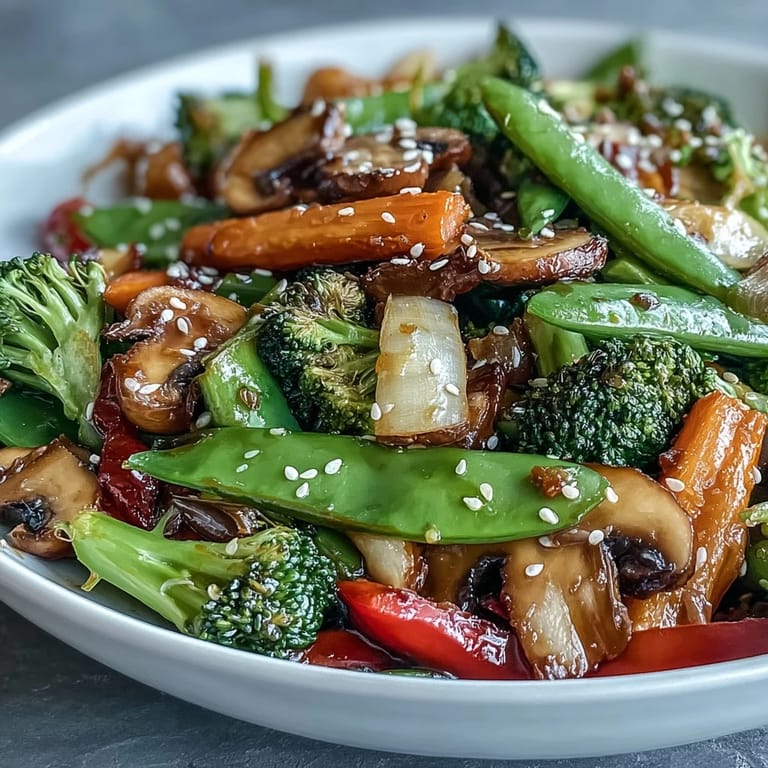
 There's a moment near the end of stir-frying, right before you add the sauce, where the kitchen is loudest—vegetables crackling, oil snapping—and you're in this focused, meditative state where nothing else matters. I think that's when cooking stops being a chore and becomes something closer to play.
Why This Stir-Fry Works
The magic isn't in any single ingredient—it's in how they move together. The ginger is the backbone, warm and slightly peppery, but it needs the garlic's salty depth and the soy sauce's umami to really sing. The vegetables are just vehicles for that flavor, and their natural sweetness (especially the carrots and bell pepper) keeps everything from tasting one-note or heavy. The sesame oil arrives late, like a final revelation, and suddenly you understand why Asian cooking feels so balanced—because it actually is.
Serving and Pairing
This is the kind of dish that begs for something under it—jasmine rice is traditional and perfect, but brown rice works too if you're thinking about nutrition, and if you're in a noodle mood, regular or egg noodles will catch the sauce beautifully. I've also served it over quinoa when I was feeling experimental, and honestly, it was good, though something about the earthiness of rice just feels right. The vegetables are the star, but they need that platform to really shine.
Making It Your Own
The ingredient list looks fixed, but it's really just a suggestion—swap broccoli for bok choy, add water chestnuts for crunch, throw in some baby corn if that's what's in your fridge. I've made this with whatever vegetables were about to go soft, and it's never disappointed. If you eat tofu or tempeh, cube it and add it in the last couple minutes so it warms through without breaking apart; if you want it spicy, load up the red pepper flakes or add a touch of sriracha to the sauce. The backbone—ginger, garlic, soy, a little acid—holds everything together, so you're really free to improvise.
- Add crispy tofu or tempeh for protein without changing the cooking time.
- If gluten matters, swap regular soy sauce for tamari and double-check your other ingredients.
- This keeps in the fridge for 3 days and reheats beautifully, though the vegetables lose their snap, so eat it fresh if you can.
 Pin it
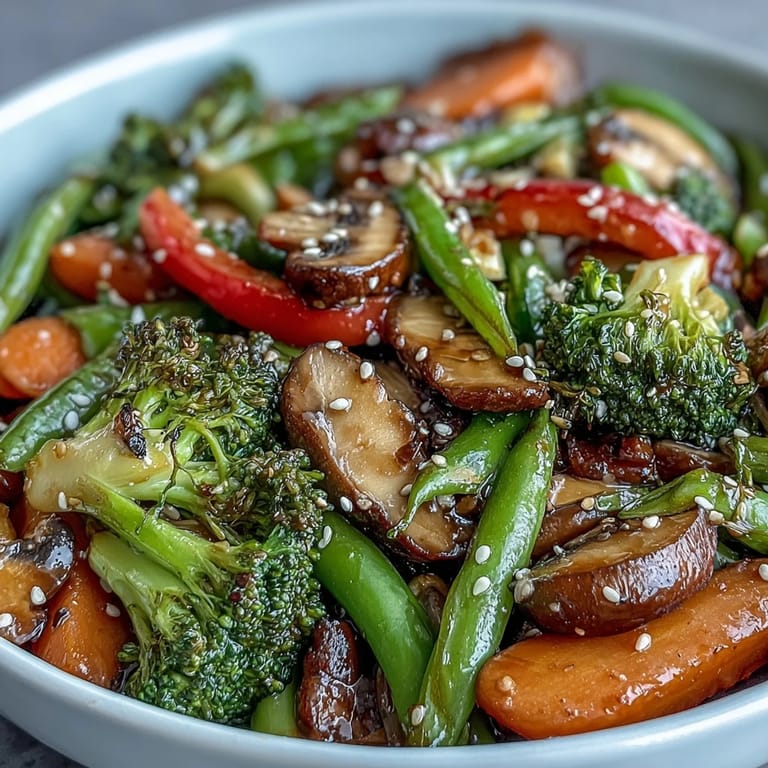
 This stir-fry has fed me on exhausted weeknights, impressed people who didn't expect much, and reminded me countless times that the simplest meals, made with attention and fresh ingredients, are often the ones that matter most. It's the kind of recipe that becomes part of your regular rotation without you even noticing.
Recipe FAQs
- → Can I use other vegetables in this stir-fry?
Absolutely. This dish works well with any crisp vegetables like zucchini, baby corn, water chestnuts, bok choy, or snow peas. Just adjust cooking times to maintain ideal texture.
- → How can I add protein to make it more filling?
Crispy tofu cubes, tempeh strips, or edamame pair perfectly with these flavors. Add them during the final minutes so they absorb the sauce without becoming mushy.
- → Is this dish spicy?
The base version is mild with just aromatic ginger and garlic. The red pepper flakes add gentle warmth, but you can adjust the amount or omit them entirely for a no-heat version.
- → What's the best way to achieve crisp-tender vegetables?
Keep the heat at medium-high and work in batches if needed. Avoid overcrowding the pan, which causes steaming. Vegetables should maintain a slight crunch when done.
- → Can I make this gluten-free?
Simply substitute regular soy sauce with gluten-free tamari. All other ingredients including the sesame oil, rice vinegar, and fresh vegetables are naturally gluten-free.