 Pin it
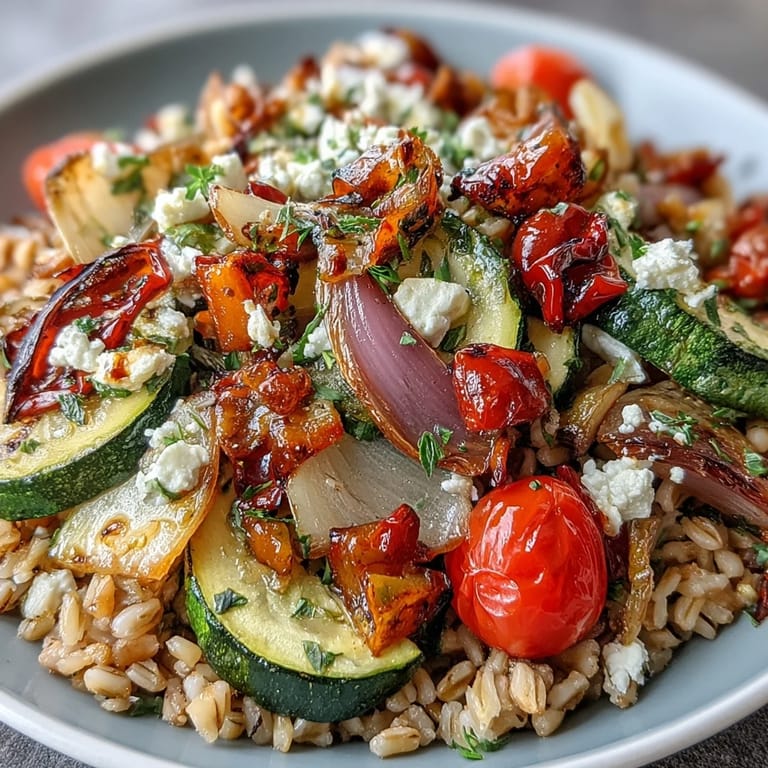
 There's something deeply satisfying about watching vegetables transform in a hot oven—the way the edges caramelize to deep gold while the insides turn tender and sweet. I discovered farro by accident one winter when I was clearing out my pantry and found this chewy grain I'd forgotten about, and suddenly I had this idea: why not pair it with roasted vegetables and let them become the stars? That bowl changed how I think about weeknight dinners, turning what could've been ordinary into something that feels intentional and nourishing.
I made this for a potluck once and watched people go back for seconds without even asking what was in it, just standing by the table and eating quietly with genuine contentment. That's when I knew this recipe had something special—it doesn't need to be complicated or precious to matter.
Ingredients
- Farro: This nutty whole grain keeps its bite even after cooking, which is exactly what makes this dish feel substantial instead of mushy—don't confuse it with pearl barley or you'll lose that chewy texture.
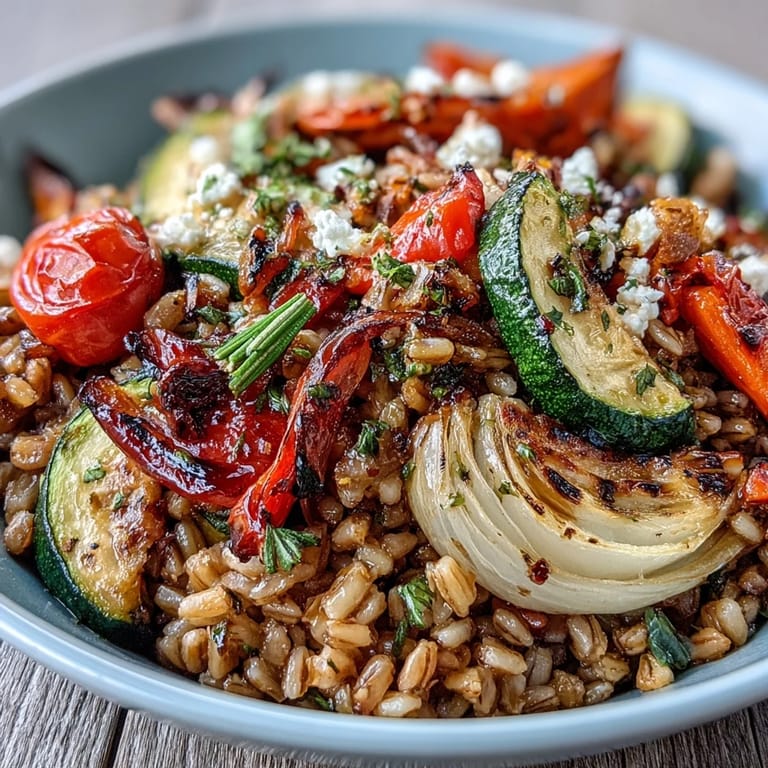
- Red bell pepper, zucchini, red onion, carrot, and cherry tomatoes: The variety of colors and textures means you're getting different flavors as you eat—choose whatever looks fresh and bright at the market.
- Olive oil for roasting: Use your regular grocery store olive oil here, not your fancy finishing oil, because heat will only waste its delicate flavor.
- Dried thyme and oregano: These herbaceous notes bridge the gap between the earthiness of grain and the sweetness of caramelized vegetables, working harder than you'd expect.
- Extra-virgin olive oil and balsamic vinegar: Save these for the finish where they actually matter—the acidity of the vinegar cuts through the richness and wakes everything up.
- Fresh parsley: Don't skip this final sprinkle; it adds brightness that makes people say they can't quite put their finger on what makes it taste so good.
- Feta cheese: Optional but it adds a salty, tangy note that feels like a reward, though the dish stands perfectly well without it if you're keeping things vegan.
Tired of Takeout? 🥡
Get 10 meals you can make faster than delivery arrives. Seriously.
One email. No spam. Unsubscribe anytime.
Instructions
- Heat your oven and prep your pan:
- Set your oven to 425°F and line a baking sheet with parchment paper so cleanup is effortless later. This temperature is hot enough to caramelize vegetables properly without drying them out.
- Toss vegetables with oil and seasonings:
- In a large bowl, combine your diced peppers, zucchini, onion wedges, carrot slices, and halved cherry tomatoes with 2 tablespoons of olive oil, thyme, oregano, salt, and pepper. Spread them out in a single layer on your prepared sheet—they need room to actually roast, not steam, so don't overcrowd.
- Roast until the edges turn golden:
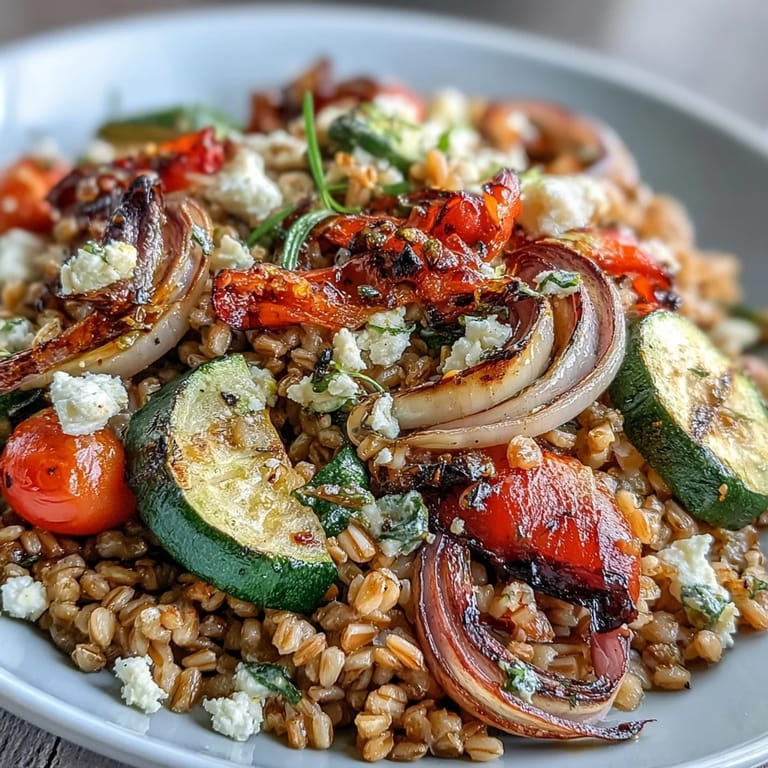
- Slide the pan into the oven for 25 to 30 minutes, stirring halfway through so everything browns evenly. You want the vegetables to have caramelized edges and tender insides, which happens when you let them sit long enough to develop color.
- Cook the farro while vegetables roast:
- While everything's in the oven, rinse your farro under cold water to remove any debris, then combine it with 3 cups of vegetable broth in a medium saucepan. Bring it to a boil, then lower the heat to a gentle simmer, cover with a lid, and cook for 25 to 30 minutes until the grains are tender but still chewy—this is not the time to overcook.
- Combine farro with roasted vegetables:
- Once both components are ready, transfer your cooked farro to a large bowl and add the roasted vegetables along with 2 tablespoons of extra-virgin olive oil and 1 tablespoon of balsamic vinegar. Toss everything gently together, letting the warm farro absorb those bright flavors.
- Finish with parsley and cheese:
- Stir in your fresh parsley and top with crumbled feta if you're using it, then taste and adjust seasonings if needed. You can serve this warm right away or let it cool to room temperature—both are equally delicious.
 Pin it
 I served this to someone who'd recently gone vegetarian and was nervous about whether they'd miss having a 'real' main course, and they ate an enormous bowl and asked for the recipe. Food doesn't need to prove itself—sometimes it just needs to be honest and delicious.
The Magic of Caramelization
Roasting vegetables at high heat isn't just a cooking method—it's a flavor transformation. When the moisture in vegetables evaporates and their natural sugars hit the hot pan, something chemical and wonderful happens: they become sweeter, more complex, almost savory-sweet in a way that raw vegetables could never achieve. The difference between steamed vegetables and roasted vegetables in this dish is the difference between eating food because you should and eating because you genuinely want to.
Why Farro Over Other Grains
Farro has this particular chewy quality that brown rice doesn't quite achieve—it stays interesting in your mouth without turning into mush. I've tried making this with quinoa, which cooks faster but disappears into the background, and with barley, which works but feels heavier. Farro hits this sweet spot where it's substantial enough to feel like dinner but light enough that you don't feel weighed down afterward, which is probably why I keep coming back to it.
Serving and Storage
This dish is genuinely better at room temperature the next day—the farro continues to absorb the balsamic and olive oil, making everything taste more unified and complete. I've eaten this cold straight from the refrigerator while standing at my kitchen counter before work, and it's somehow comforting in that moment when you're not quite awake but you need something that tastes good. The feta gets softer and distributes itself better when the whole thing sits overnight, which is a happy accident rather than something you need to plan for.
- Store leftovers in an airtight container in the refrigerator for up to four days without any quality loss.
- You can meal-prep this on Sunday and have lunch ready for multiple days, which feels like giving yourself a gift.
- If you want to serve it warm after storing it, a gentle reheat in a pan with a splash of water brings it back to life without drying it out.
 Pin it
 This recipe taught me that you don't need a long ingredient list or complicated techniques to create something worth eating multiple times. It's proof that when you respect good ingredients and give them space to do what they do best, magic happens naturally.
Recipe FAQs
- → What does farro taste like?
Farro has a nutty, slightly sweet flavor with a satisfyingly chewy texture similar to barley but slightly softer. It absorbs flavors beautifully while maintaining its structure.
- → Can I make this dish ahead?
Yes, this dish tastes even better the next day as flavors meld together. Store in the refrigerator for up to 4 days and serve warm, at room temperature, or cold.
- → Is farro gluten-free?
No, farro contains gluten as it's a type of wheat. For a gluten-free alternative, try quinoa, brown rice, or sorghum instead.
- → What vegetables work best?
Root vegetables, eggplant, mushrooms, butternut squash, and Brussels sprouts all roast beautifully. Choose vegetables that cook at similar rates for even caramelization.
- → Do I need to rinse farro before cooking?
Rinsing farro removes dust and excess starch for a cleaner taste. A quick cold-water rinse is sufficient before adding it to the cooking liquid.