 Pin it
 One summer afternoon, my friend showed up at my door with a overflowing farmers market bag and zero meal plan. We stood in my kitchen staring at zucchini, bell peppers, and eggplant, and she said, "Let's make something that tastes like a vacation." That's when we threw together this Mediterranean Buddha Bowl, and honestly, it became our go-to move whenever we needed something that felt both indulgent and genuinely nourishing. The magic isn't in any single ingredient—it's in how they all come together, each one holding its own while making everything taste better.
My mom tried this bowl for the first time during a Sunday visit, and she sat there for a minute just quietly eating, which honestly never happens. She looked up and asked if I was finally becoming a "real cook," and I laughed because I hadn't done anything fancy—I'd just listened to what the vegetables wanted to become. That conversation stuck with me more than any complicated recipe ever could.
Ingredients
- Zucchini, red bell pepper, red onion, and eggplant: These are your canvas for roasting—they'll caramelize at the edges and turn jammy in the middle if you give them space on the baking sheet and resist the urge to crowd them.
- Olive oil: Don't skimp here; good olive oil makes the vegetables taste like themselves, just better.
- Dried oregano and smoked paprika: These two are the whisper of the Mediterranean, adding warmth and depth without shouting.
- Mixed salad greens: Use whatever's freshest at your market; arugula brings peppery bite, spinach adds earthiness, romaine keeps things crisp.
- Cooked chickpeas: Canned works perfectly fine if you rinse them well—that starchy liquid they swim in can make your bowl feel gluey.
- Ripe avocado: Cut it just before assembling, slice it directly into the bowl so it doesn't oxidize, and don't fret if it's not a perfect creamy texture—flavor matters more than Instagram aesthetics.
- Kalamata olives: Halving them releases their briny punch throughout the bowl instead of making you bite into unexpected intensity.
- Hummus: Whether store-bought or homemade, it's the creamy anchor that ties everything together without dairy.
- Tahini: This is where the magic lives—sesame seeds ground into nutty, silky paste that becomes transcendent when you thin it with lemon juice.
- Lemon juice and water: These transform tahini from thick paste into a drizzleable dressing that clings to everything beautifully.
- Garlic and cumin: Just enough to make the dressing whisper rather than shout, grounding all those bright Mediterranean flavors.
Tired of Takeout? 🥡
Get 10 meals you can make faster than delivery arrives. Seriously.
One email. No spam. Unsubscribe anytime.
Instructions
- Heat your oven and prep your vegetables:
- Set the oven to 425°F and while it's warming, chop your zucchini, bell pepper, onion, and eggplant into roughly the same size so they cook evenly. You want pieces that feel substantial in your mouth, not tiny, and not so large they're still raw when the edges char.
- Season and spread on the baking sheet:
- Toss everything with olive oil, oregano, smoked paprika, salt, and pepper until each piece glistens. Spread them in a single layer where they can all touch the hot pan—overcrowding means steaming instead of roasting, and that's not what we want here.
- Roast until the edges tell you they're done:
- After 25 to 30 minutes, look for caramelized, slightly blackened edges and tender insides. Toss them halfway through so every side gets its moment with the heat. The kitchen will smell unreal.
- Make the tahini dressing while vegetables roast:
- Whisk tahini, lemon juice, water, minced garlic, and cumin in a bowl, adding water gradually until it reaches the consistency of heavy cream. It should pour slowly from a spoon, not plop.
- Build your bowls with intention:
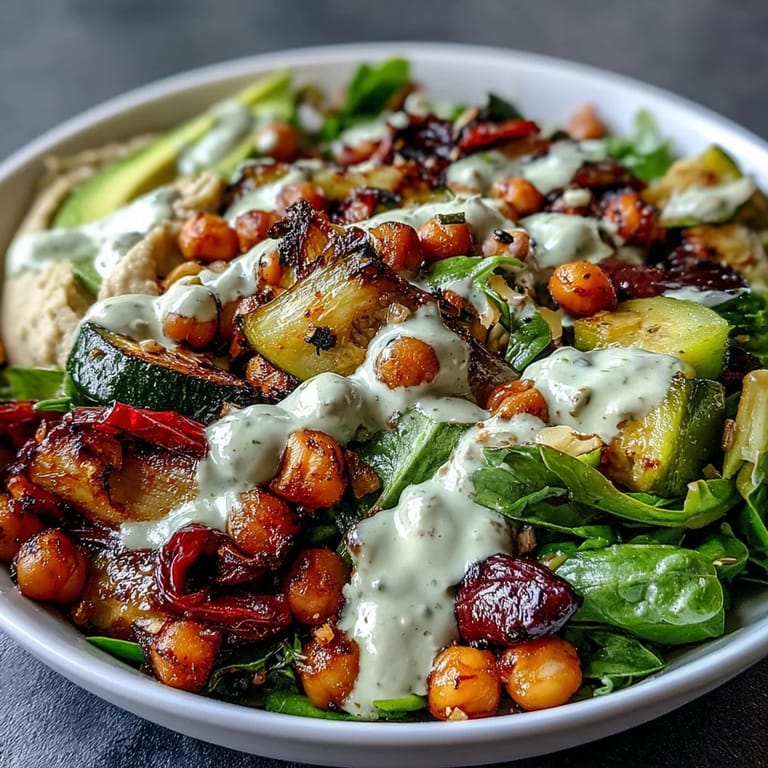
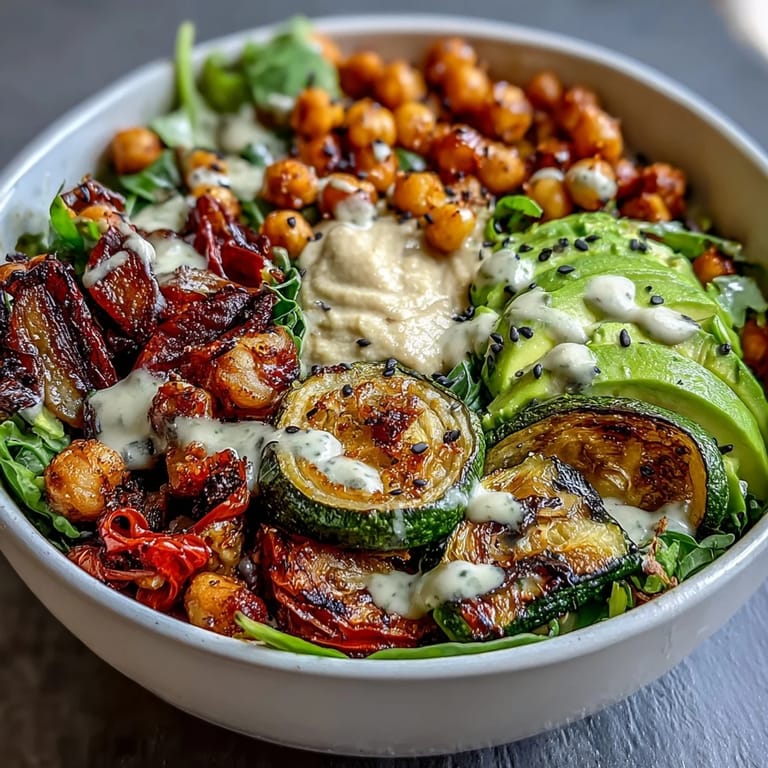
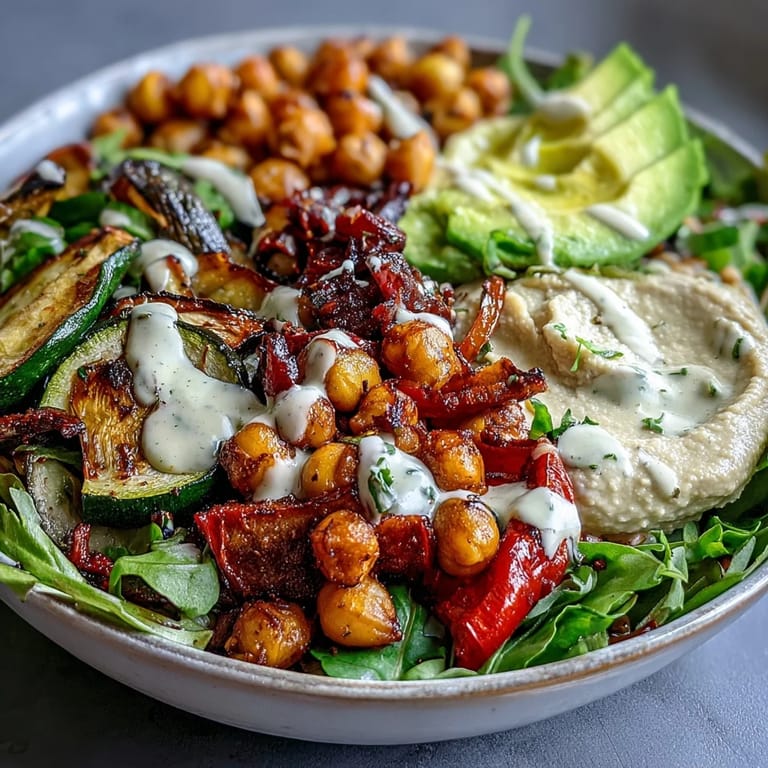
- Start with greens as your base, then arrange chickpeas, roasted vegetables, avocado slices, and olives around the bowl like you're setting a table for someone you love. Drop a generous spoonful of hummus somewhere in the middle.
- Drizzle and serve immediately:
- Right before eating, stream that tahini dressing over everything, letting it pool in the gaps and coat the greens. This timing matters because the dressing stays vibrant and doesn't get absorbed into sadness.
 Pin it
 There was this moment during a dinner party when someone asked if I'd made everything from scratch, and before I could answer, another guest was already halfway through the bowl saying they'd never realized tahini could taste like that. I realized then that this bowl isn't about complexity or technique—it's about respecting each ingredient enough to let it shine, and that's a kind of cooking that actually matters.
Building Flavor Layers
This bowl works because every component has a different role to play—the greens provide structure and freshness, the roasted vegetables add caramelized sweetness and warmth, the chickpeas bring protein and earthiness, the avocado whispers creamy richness, and the olives snap with briny intensity. The hummus and tahini dressing tie everything into a coherent whole that tastes like way more than the sum of its parts. I learned this by accident when I made a "simpler" version once using just greens and chickpeas, and it tasted flat in comparison—turns out all these layers exist for a reason.
Making It Your Own
The beauty of a Buddha Bowl is that it's forgiving and flexible, so don't feel locked into exactly what I've written here. If you love quinoa or brown rice, add a handful for extra heartiness and substance. Prefer white beans to chickpeas or want to try lentils instead? Go for it—they'll taste slightly different but still anchor the bowl perfectly. Toasted pine nuts or pumpkin seeds scattered on top add a crunch that changes the entire texture, and honestly, sometimes that's exactly what the bowl needs.
Timing and Serving Wisdom
You can prep most components ahead of time, which makes this bowl perfect for meal prep or throwing together on a busy weeknight. The roasted vegetables taste fine at room temperature or even cold, the chickpeas are already cooked, and the hummus sits happily in the fridge until you need it. The only things that really need last-minute attention are slicing the avocado and whisking the tahini dressing, which takes maybe five minutes total. This is the kind of meal that becomes easier the more times you make it, because you stop overthinking and start trusting your instincts.
- Assemble bowls just before eating so the greens stay crisp and the avocado doesn't turn brown.
- If you're meal prepping, keep all components separate and assemble fresh each time you eat.
- The tahini dressing is liquid gold—make extra and use it on salads, roasted vegetables, or literally anything for the next few days.
 Pin it
 This bowl has become my answer to the question "what should we eat?" when I want something that feels both special and achievable. It's the kind of meal that nourishes you without making you feel like you spent your whole day in the kitchen.
Recipe FAQs
- → What vegetables are used in the Mediterranean bowl?
Zucchini, red bell pepper, red onion, and eggplant are diced and roasted to add depth and texture.
- → How is the tahini dressing prepared?
The dressing combines tahini, lemon juice, garlic, cumin, water, and salt whisked to a smooth consistency.
- → Which protein source complements the bowl?
Cooked chickpeas provide plant-based protein and pair well with the roasted vegetables and greens.
- → Can the bowl be customized for extra crunch?
Yes, toppings like toasted pine nuts or pumpkin seeds add a pleasant crunch.
- → What are suitable side beverages for this dish?
A crisp Sauvignon Blanc or sparkling water with lemon enhances the fresh, vibrant flavors.
- → Is this bowl gluten-free and vegan-friendly?
Yes, it naturally fits gluten-free and vegan diets but check packaged ingredients for allergens.