 Pin it
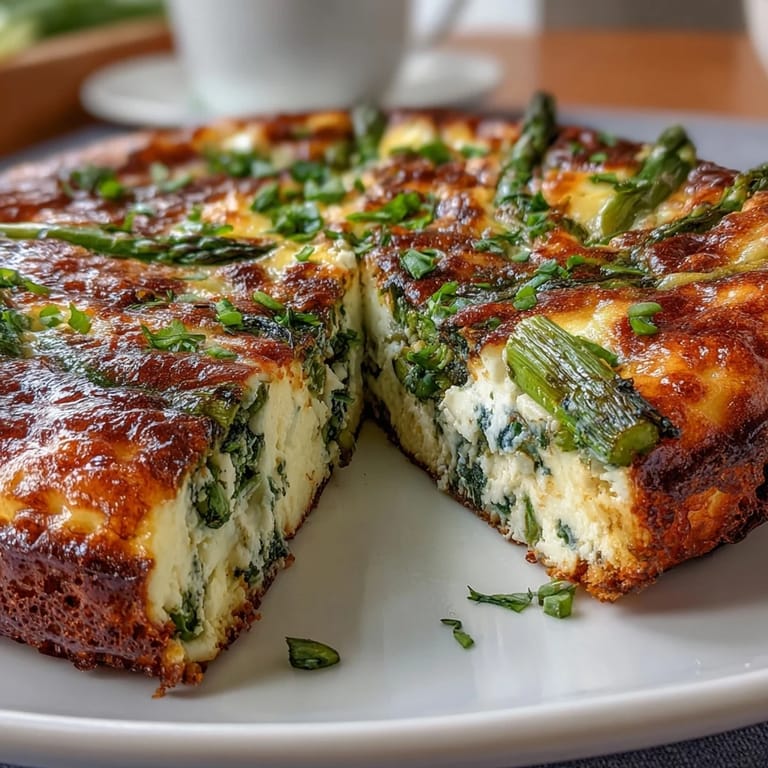
 The first thing that hit me when I cracked open the eggs for this frittata was the ultra-fresh scent of spring onions mingling with butter in the pan — the kind of smell that makes you stop mid-chop and close your eyes for a moment. Tossing together asparagus and peas felt like a celebration instead of cooking, especially with sunlight filtering in from the kitchen window. I remember laughing over my messy spinach chopping, knowing the bits wouldn’t really mind once the eggs smoothed them all out. Goat cheese always brings a gentle tang that feels like a treat, not a chore. There’s something playful about layering herbs right before baking that makes the kitchen feel alive.
I made this frittata one Saturday for friends visiting from out of town, nervous that they'd miss the big city brunches they loved. We circled around the skillet, scraping up crisp edges and letting slices cool as we shared stories. Someone spilled goat cheese onto the counter — it turned into laughter and a lesson that messy kitchens mean fun happens. By the end, even the picky eater was asking for seconds. I still associate the sound of forks scraping plates with that morning.
Ingredients
- Asparagus: Choose thin stalks for tenderness, and remember to trim the woody ends for best texture.
- Fresh or frozen peas: Fresh peas give a sweet pop, but frozen peas work well — just add them straight in without thawing.
- Baby spinach: Roughly chop so the greens nestle into the eggs, preventing bulky bites.
- Spring onions: Slice thinly to distribute their gentle bite throughout the frittata.
- Eggs: Use large eggs, best at room temperature for smooth whisking.
- Whole milk or cream: Adds richness — if you’re after a fluffier frittata, opt for cream instead of milk.
- Goat cheese: Crumble it fresh just before adding so it melts into pockets of tang.
- Unsalted butter: Sautéing the vegetables in butter imparts a creamy, caramelized flavor.
- Fresh chives: These add a mild oniony flair that brightens the filling.
- Fresh dill or parsley: Chopped herbs offer leafy notes so the frittata feels garden-fresh.
- Salt and freshly ground black pepper: Season with a confident hand — tasting as you go keeps the flavor balanced.
Tired of Takeout? 🥡
Get 10 meals you can make faster than delivery arrives. Seriously.
One email. No spam. Unsubscribe anytime.
Instructions
- Heat Up & Prep:
- Preheat your oven to 375°F (190°C) and set out all your ingredients; the anticipation feels like setting the stage for something good.
- Sauté the Veggies:
- Melt butter in a large oven-safe skillet over medium heat — listen for it to hiss, then add asparagus and cook for a couple minutes. Toss in peas and spring onions, sauté for another few minutes until everything softens and turns a bright emerald, stirring in spinach just until wilted.
- Beat the Eggs:
- Whisk together eggs, milk or cream, chives, dill or parsley, salt, and pepper in a large bowl until the mixture looks silky and well blended.
- Combine & Cook:
- Pour egg mixture evenly over the veggies in the pan, then let it cook undisturbed for 3–4 minutes; you’ll see the edges set while the center still quivers.
- Add Cheese & Bake:
- Scatter goat cheese crumbles on top, then slide the skillet into the oven. Bake for 10–12 minutes, watching for a puffed, golden frittata that is just set inside.
- Rest & Serve:
- Remove from the oven, let it cool slightly for 5 minutes so the flavors settle. Slice and serve warm or at room temperature, savoring the creamy tang and herby aroma.
 Pin it
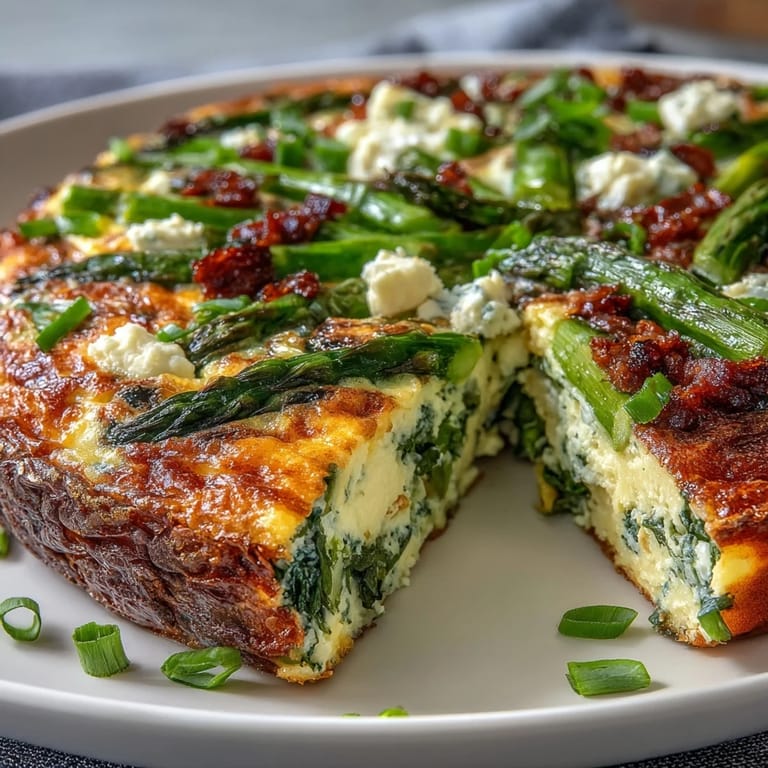
 One brunch, my cousin surprised me by saying this frittata tasted “like spring in a slice”—and for once, kitchen compliments felt as good as the food. It turned our late-morning gathering into something memorable, with everyone lingering over the last piece rather than rushing off.
Spring Vegetable Swaps
Depending on the market haul or what’s hiding in the fridge, I’ve tossed in zucchini coins or fava beans, amazed at how the frittata adapts. The keys are to keep the veggie pieces small and sauté them briefly, so everything melds without soggy bites.
Serving Suggestions That Shine
This dish loves company: a sharp green salad and a crusty slice of bread round it out for a meal. Add a glass of chilled Sauvignon Blanc or sparkling lemon water, and suddenly it feels festive, not just functional.
A Few Final Tricks From The Stove
Grease your skillet lightly even if it’s “nonstick”, because baked eggs can cling in sneaky ways. Watch for gentle browning at the edges (— not deep golden) as your cue for doneness. Letting the frittata rest post-oven softens the goat cheese into magical pockets.
- Don’t skip the fresh herbs , they wake up the whole dish.
- Warm frittata tastes best, but leftovers also make a great cold snack.
- Serve from the skillet to keep slices neat and avoid tearing.
 Pin it
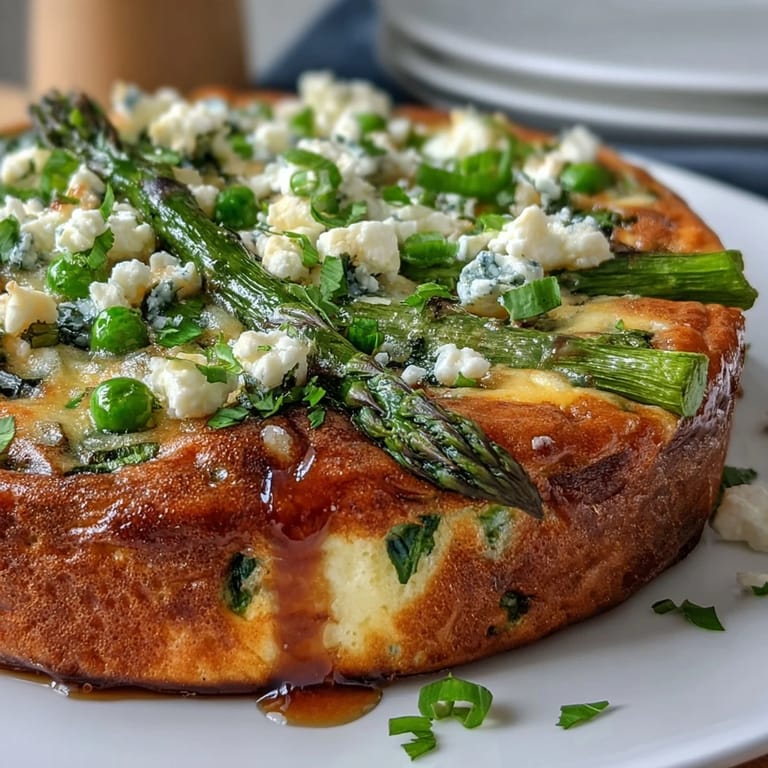
 This frittata always leaves the kitchen smelling hopeful — even the simplest brunch can turn special. Let spring’s flavors brighten your table, one slice at a time.
Recipe FAQs
- → What vegetables work best in a spring frittata?
Asparagus, peas, spinach, and spring onions bring bright, tender flavors. Other options include zucchini or fava beans for variety.
- → Can the frittata be made dairy-free?
Yes, substitute plant-based milk and omit goat cheese or use vegan cheese for a dairy-free version.
- → What tools are needed for preparation?
An oven-safe skillet, mixing bowl, whisk, knife, and spatula ensure smooth cooking and easy serving.
- → How do I know when the frittata is done?
The frittata should be puffed and just set in the center; avoid overbaking to maintain a creamy texture.
- → What can I serve with the frittata?
Pair with a green salad, crusty bread, and sparkling water or a crisp white wine for a balanced meal.
- → Is this frittata suitable for vegetarians?
Yes, it contains eggs and dairy but is meat-free and gluten-free, making it ideal for vegetarian diets.