 Pin it
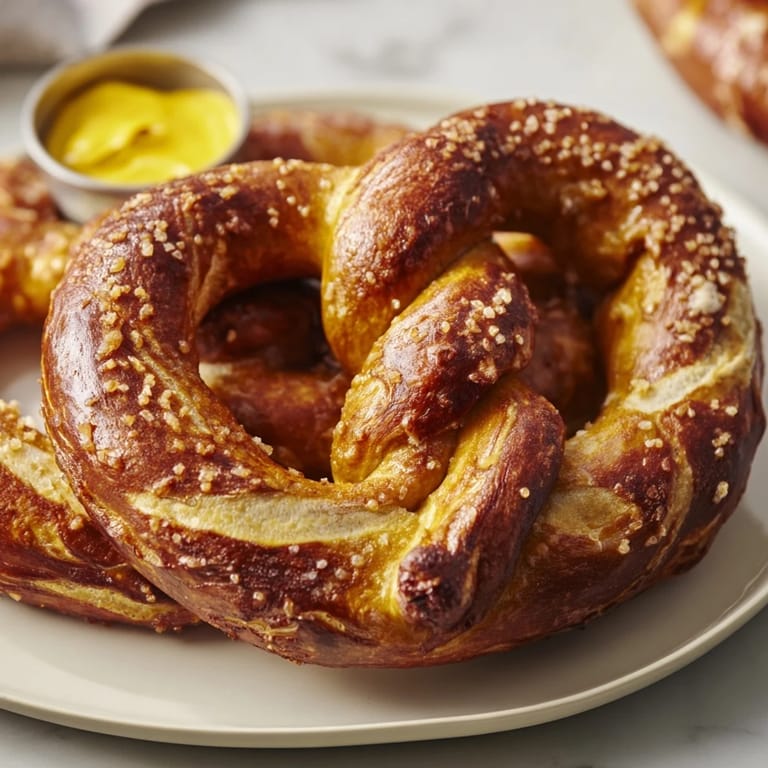
 The smell alone stopped me in my tracks at that downtown bakery years ago. That unmistakable alkaline aroma, the deep golden shine, the way steam rose off each twisted knot. I went home that same day determined to figure out what made mall pretzels so different from regular bread. Four failed attempts later, I finally learned about the baking soda bath that changes everything.
My roommate walked in during my first pretzel experiment and found me literally hovering over a boiling pot of baking soda water like a mad scientist. She watched in silence as I dipped each rope of dough, then promptly ate three warm pretzels standing at the counter. Now every time she visits, she asks if 'the pretzel experiment' is happening again.
Ingredients
- Bread flour: The higher protein content creates that signature chewy texture and helps the pretzels hold their shape during boiling
- Warm water at 110°F: This temperature wakes up the yeast without killing it, and I learned the hard way that too hot means starting over
- Active dry yeast: One standard packet gives reliable rise every time, and watching it foam up feels like kitchen magic
- Granulated sugar: Feeds the yeast and helps the pretzels develop that gorgeous deep brown color in the oven
- Kosher salt: Dissolves evenly into the dough and enhances all the other flavors without making anything taste salty
- Unsalted butter melted: Adds richness and keeps the crumb tender while still letting that pretzel chew shine through
- Baking soda for the bath: This is the secret ingredient that creates the authentic pretzel flavor and that signature shiny crust
- Egg wash: Gives the salt something to stick to and creates that professional bakery sheen
- Coarse pretzel salt: Those big crunchy crystals are non-negotiable for the real pretzel experience
Tired of Takeout? 🥡
Get 10 meals you can make faster than delivery arrives. Seriously.
One email. No spam. Unsubscribe anytime.
Instructions
- Wake up the yeast:
- Combine warm water, sugar, and yeast in a large bowl. Let stand for 5 minutes until you see a layer of foam on top, which means the yeast is alive and ready to work.
- Build the dough:
- Add melted butter and salt to the yeast mixture, then stir in flour one cup at a time until a shaggy, sticky dough forms that pulls away from the sides of the bowl.
- Knead until smooth:
- Turn onto a floured surface and knead for 5 to 7 minutes until the dough feels smooth, elastic, and bounces back when you press it with your finger.
- Let it rise:
- Place in a lightly oiled bowl, cover with a clean towel, and let rise in a warm spot for 1 hour or until the dough has doubled in size.
- Heat things up:
- Preheat oven to 450°F and line two baking sheets with parchment paper while bringing 10 cups water and baking soda to a boil in a large pot.
- Shape the pretzels:
- Punch down dough and divide into 8 equal pieces, then roll each into a 20 to 22 inch rope and form into the classic pretzel shape by making a U, twisting the ends twice, and pressing them onto the bottom curve.
- The alkaline dip:
- Carefully lower each pretzel into the boiling baking soda bath for 30 seconds, then remove with a slotted spatula and place on the prepared baking sheets.
- Finish and bake:
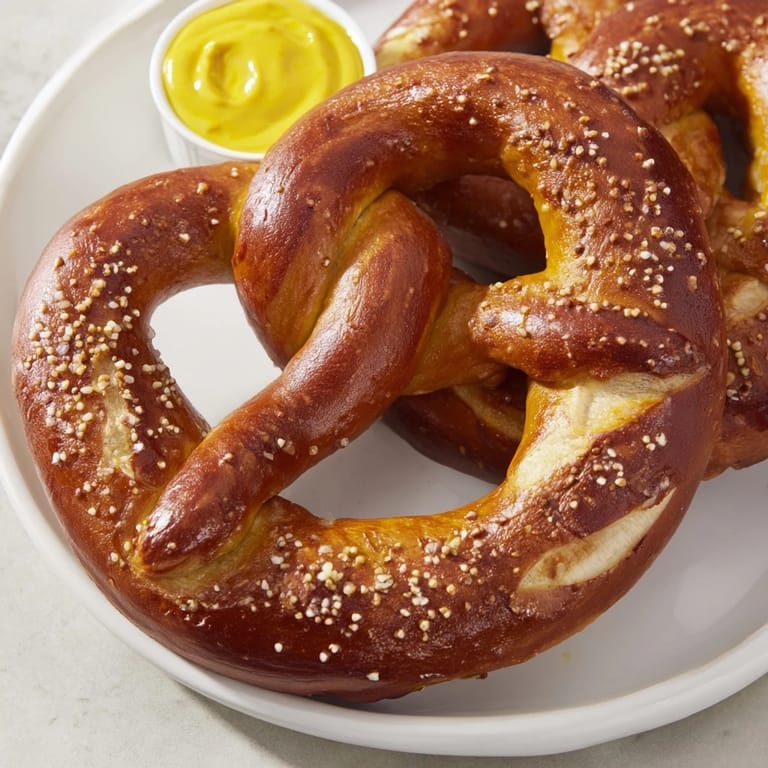
- Brush each pretzel with egg wash, sprinkle generously with coarse salt, and bake for 12 to 15 minutes until deep golden brown and glossy.
 Pin it
 My nephew asked if he could shape one into his initials during our last family gathering. That pretzel came out of the oven looking gloriously imperfect, and he beamed like he had invented something entirely new. Sometimes the best moments in the kitchen are the ones that do not look like the picture.
The Science Behind The Bath
That baking soda bath does more than look impressive. The alkaline environment gelatinizes the surface starch, creating that characteristic pretzel flavor and chewy, shiny exterior that regular baking just cannot achieve. Professional bakeries use food grade lye, but baking soda gives us home cooks almost the same result without the safety concerns.
Shaping Secrets
Getting that classic twist takes practice, and my first few attempts looked more like tangled knots than recognizable pretzels. The key is rolling the dough evenly from the center outward, then letting the ropes rest for a few minutes before shaping so they do not snap back. If your shape is not perfect, do not worry—they still taste incredible.
Serving Ideas
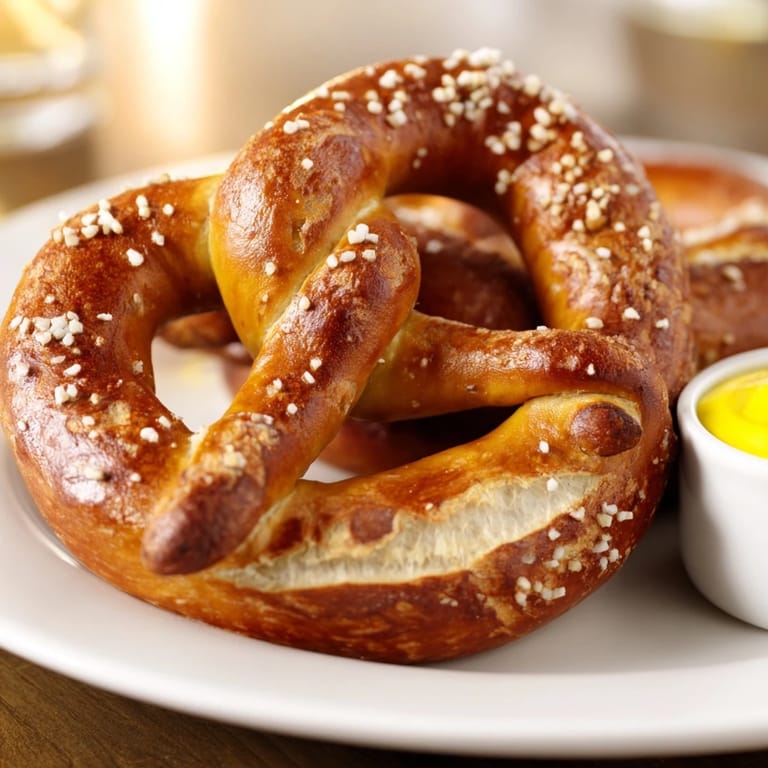
While classic yellow mustard is traditional, I have discovered that spicy brown mustard adds a wonderful depth that cuts through the richness. Some people in my house insist on cheese sauce, and I have even seen pretzels used as the base for mini pizza snacks. They are best enjoyed within an hour of baking, but rewarming them in a 300°F oven brings back most of the fresh-baked magic.
- Cinnamon sugar pretzels make an incredible dessert when you skip the salt and brush them with butter after baking
- Sesame or poppy seeds add wonderful crunch and variety if you want something different from salt
- These freeze beautifully and reheat at 350°F for 5 minutes when you need a quick snack
 Pin it
 There is something deeply satisfying about pulling a tray of homemade pretzels from the oven, all glossy and golden. They bring people to the kitchen faster than the dinner bell ever could.
Recipe FAQs
- → What makes soft pretzels chewy?
The baking soda bath is the key to that signature chewy texture and deep golden color. Boiling each pretzel for 30 seconds in a baking soda solution gelatinizes the surface starch, creating the distinctive pretzel flavor and chewy exterior while keeping the inside tender.
- → Can I make these pretzels ahead of time?
Yes, you can prepare the dough ahead and refrigerate it after the first rise for up to 24 hours. Let it come to room temperature before shaping and baking. Baked pretzels also freeze well—reheat frozen ones in a 350°F oven for 5-7 minutes.
- → Why do I need to use bread flour?
Bread flour has higher protein content than all-purpose flour, which creates more gluten. This gives the pretzels their characteristic chewy texture and structure. You can substitute all-purpose flour in a pinch, though the texture will be slightly less chewy.
- → What can I serve with soft pretzels?
Classic yellow mustard or spicy brown mustard are traditional pairings. For variety, try cheese sauce, honey mustard, or even a savory dip like beer cheese. Sweet variations with cinnamon sugar or a vanilla glaze make excellent dessert options.
- → How do I store leftover pretzels?
Store cooled pretzels in an airtight container at room temperature for up to 2 days. For longer storage, wrap individually and freeze for up to 3 months. Reheat in a 350°F oven for 5-7 minutes to restore freshness and crisp the exterior.